Garlic Butter Shrimp Pasta Recipe: Easy 30-Minute Dinner In 2026
Garlic Butter Shrimp Pasta Recipe – Easy & Delicious In 2026
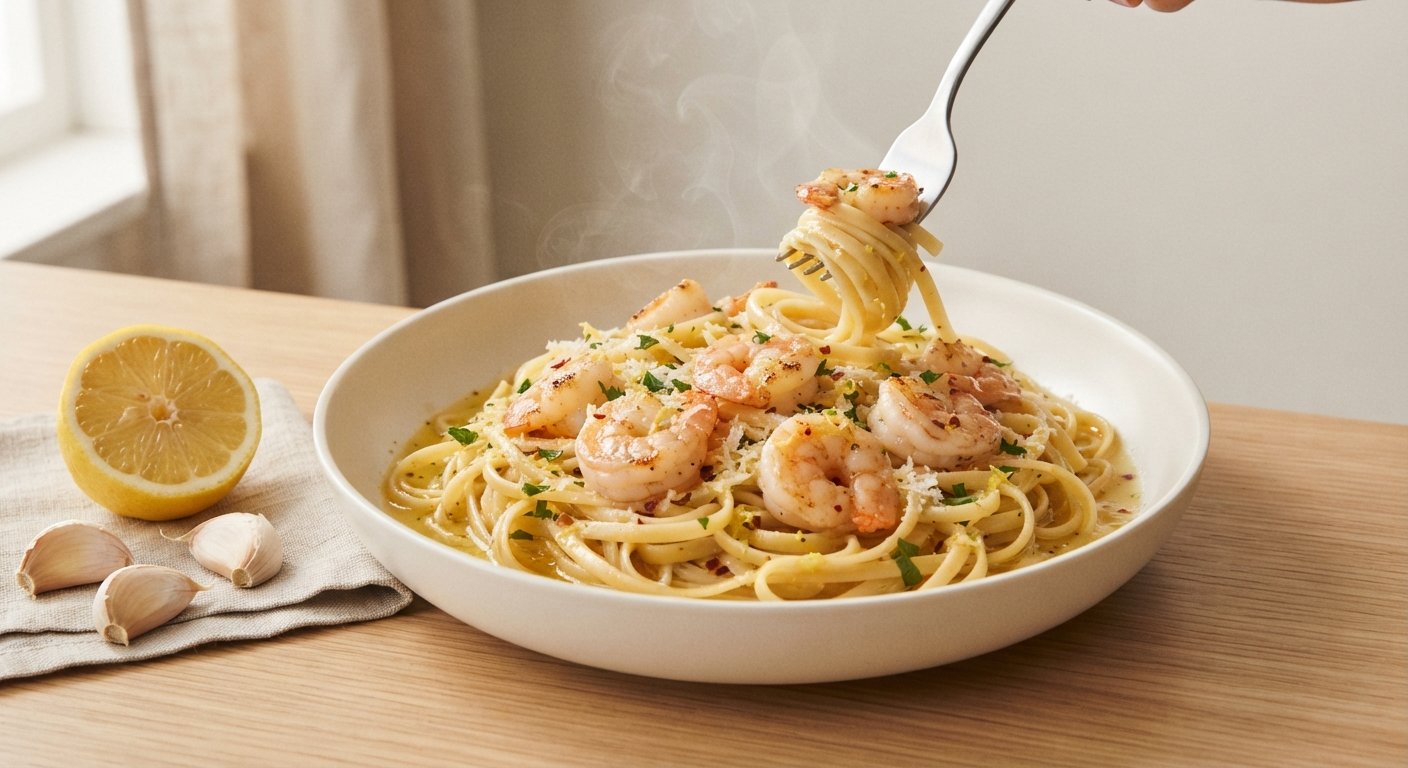
This garlic butter shrimp pasta recipe is what to cook when you want dinner to feel special without spending the evening in the kitchen. Plump, juicy shrimp and silky linguine in a bright lemon and garlic butter sauce. It takes about 30 minutes from start to finish, and most of that is the pasta water coming to a boil.
Shrimp cook in minutes, which makes them one of the best ingredients for a fast dinner. The trick is not to overdo them. A quick sear in a hot pan gives them color and flavor, and a short rest off the heat keeps them tender. The same pan then makes the sauce, so all the browned bits and garlic end up in the pasta.
The sauce is simple. Butter, plenty of garlic, a splash of stock, lemon juice and a little starchy pasta water. Together they make a light, glossy coating that clings to every strand without turning heavy or greasy. A handful of Parmesan and fresh parsley round it off.
It works for a weeknight, a date night or a small family gathering. Serve it with a green salad and some crusty bread, and it feels like a proper meal. If you have been looking for an easy shrimp pasta dinner that tastes like it came from a good restaurant, this one is a very good place to begin.
Garlic Butter Shrimp Pasta Recipe
Ingredients
Method
- Large shrimp. Look for shrimp labeled 21 to 25 per pound, or similar. Larger shrimp are harder to overcook and have a meatier bite. Small shrimp turn rubbery in seconds. Fresh or frozen both work, and frozen is often the better choice, because many shrimp sold as fresh were frozen and thawed before they reached the counter.

- Peeled and deveined. This saves time at the table and in the pan. If you buy shell-on shrimp, peel them and use the shells for a quick stock if you like. Run a small knife along the back to remove the dark vein.
- Linguine or spaghetti. Long, thin pasta carries a light sauce well. Linguine is slightly flatter and holds more sauce, so it has a small edge. Angel hair cooks too fast and can clump, and short pasta shapes work in a pinch.
- Butter. The butter makes the sauce silky and carries the garlic flavor. Unsalted gives you control over the salt, because the Parmesan and the pasta water already bring plenty.
- Garlic. Six cloves may sound like a lot, but they mellow in the butter. Fresh is essential. Jarred garlic tastes sharp and slightly sour. Slice or mince it, but keep the heat gentle, because burnt garlic turns bitter and cannot be saved.
- Stock and lemon juice. The liquid lifts the browned bits from the pan and builds the base of the sauce. Lemon adds the brightness that makes the dish taste fresh instead of heavy. If you prefer, dry white wine can replace the stock, but this version needs none.
- Red pepper flakes. A gentle warmth that sits in the background. Add more if you like heat, or leave them out for a milder dish.
- Pasta water. The starch in it binds the sauce to the pasta. It is free, and it makes the difference between a sauce that slides off and one that clings. Always save a cup before draining.
- Parmesan. It adds a salty, nutty depth. Grate it fresh, because pre-shredded cheese is coated with powder that stops it melting smoothly.
- Parsley. It adds color and a clean, green flavor. Flat-leaf parsley has more taste than curly.
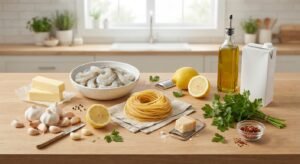
- shrimp pasta moves quickly. The shrimp take only a few minutes, and the sauce comes together right after. Spending ten minutes on prep makes the cooking calm and keeps everything from overcooking.
- If your shrimp are frozen, thaw them in a bowl of cold water for 10 to 15 minutes, or overnight in the fridge. Drain them well and pat them completely dry with paper towels. Wet shrimp steam instead of searing, and they release water that thins the sauce. This single step makes the most visible difference to the result.
- Toss the dried shrimp with the salt, pepper, paprika and garlic powder in a bowl. Keep the seasoning simple, because the sauce brings plenty of flavor. Let them sit while you get the rest ready, but not for more than 15 minutes. Salt draws out moisture, and long sitting makes the shrimp watery.
- Peel the garlic and slice it thin, or mince it if you want the flavor to spread more evenly through the sauce. Thin slices give a mellow, sweet taste and look pretty. Minced garlic is sharper. Either way, cut it just before cooking and keep it in a small bowl near the stove.
- Grate the lemon zest first, then cut the lemon and squeeze the juice. Zest is far easier to grate from a whole lemon. Measure out the juice and keep both in separate small bowls. The zest goes in at the end for fresh fragrance.
- Grate the Parmesan on the fine side of a grater so it melts quickly. Chop the parsley roughly. Keep both ready at the stove, because they go in at the very end, when there is no time to stop and chop.
- A large, wide skillet, about 30 cm (12 inches), gives the shrimp room to sear and the pasta room to toss. A crowded pan steams shrimp instead of browning them. Heavy stainless steel or cast iron holds heat well. Avoid very thin pans, which scorch the garlic.
- Serve the pasta straight from the pan into warm, wide bowls. Twirl it with tongs to make neat nests, and arrange the shrimp on top. Finish with extra Parmesan, a pinch of parsley and a lemon wedge.
- This garlic butter shrimp pasta recipe is rich, so a simple side works best. A crisp green salad with a lemony dressing, roasted asparagus or steamed broccoli keeps the plate light. Warm garlic bread is a classic partner, and it is useful for mopping up any sauce left in the bowl.
- For a larger spread, serve it next to a Caesar salad or a bowl of tomato soup. For a lighter meal, use less pasta and add extra vegetables such as spinach or zucchini ribbons to the pan.
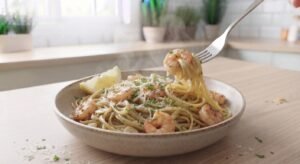
- Serve it right away on warm plates. Shrimp pasta keeps cooking in its own heat, and the sauce tightens as it cools. If it thickens on the table, a splash of hot pasta water loosens it again.
How to Make This Garlic Butter Shrimp Pasta Recipe Step by Step
Step 1:
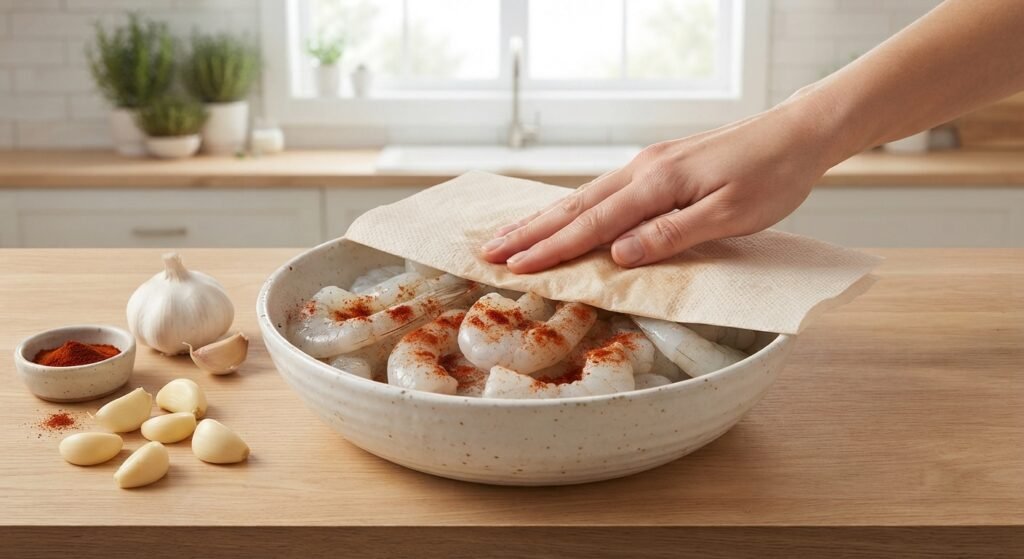
Prep the shrimp. Peel and devein the shrimp if needed, then pat them completely dry with paper towels. Toss with the salt, pepper, paprika and garlic powder until evenly coated. Keep them in the fridge while you start the pasta. Dry, seasoned shrimp sear properly and take on a golden color. A good sear is the foundation of this dish, because the browned bits left in the pan flavor the sauce later.
Step 2:
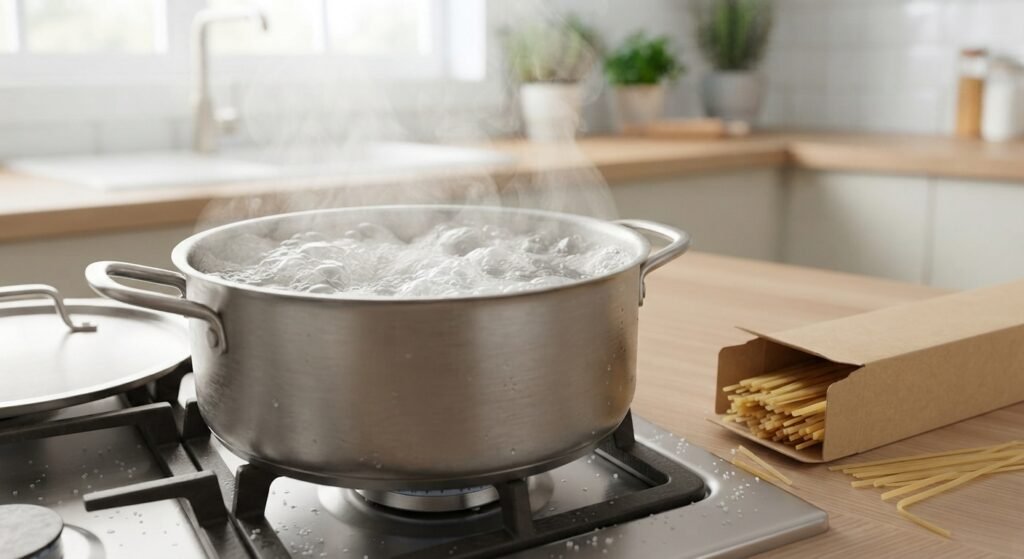
Boil the pasta water. Fill a large pot with at least 4 liters of water, add the tablespoon of salt and bring it to a rolling boil over high heat. The water should taste like a mild sea. Cover the pot to speed things up. Meanwhile, slice the garlic, zest and juice the lemon and grate the Parmesan, so that everything is within reach before the pan gets hot.
Step 3:
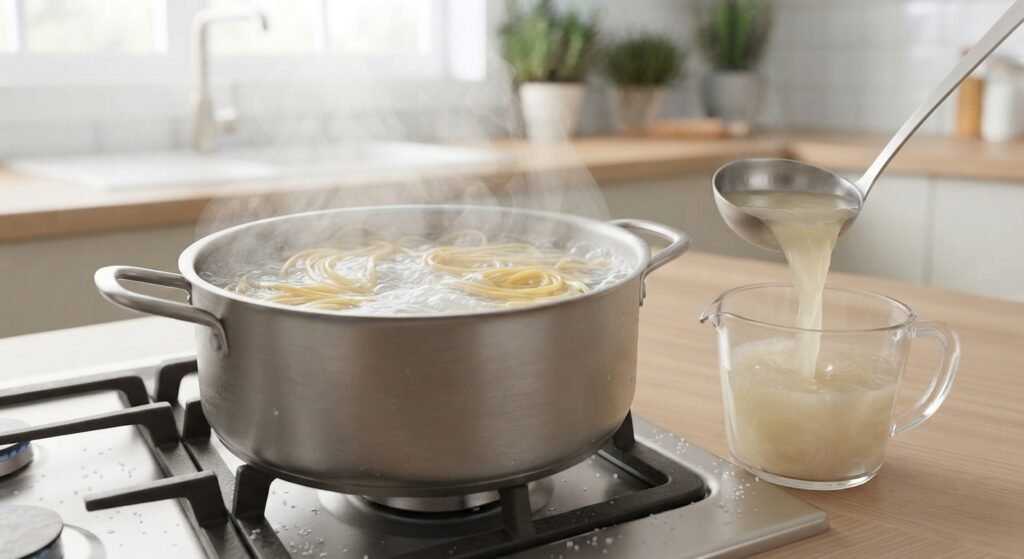
Cook the pasta. Add the linguine to the boiling water and stir to separate the strands. Cook for 1 minute less than the package says, so it stays slightly firm. It will finish cooking in the sauce. Before you drain, scoop out 1 cup of the starchy water. Drain the pasta without rinsing. This garlic butter shrimp pasta recipe relies on that starchy water to give the sauce its silky texture.
Step 4:
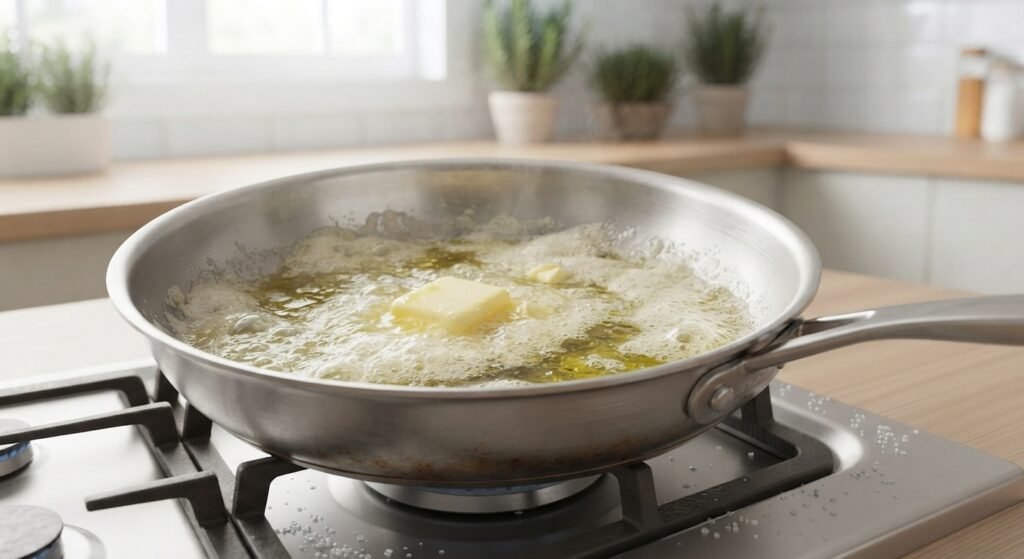
Heat the pan. Place a large skillet over medium-high heat and add the olive oil and 1 tablespoon of butter. Wait until the butter foams and the oil starts to shimmer, which takes about a minute. A properly hot pan is what gives the shrimp a quick sear without overcooking them in the middle. If the pan is too cool, the shrimp release water and turn pale and tough.
Step 5:
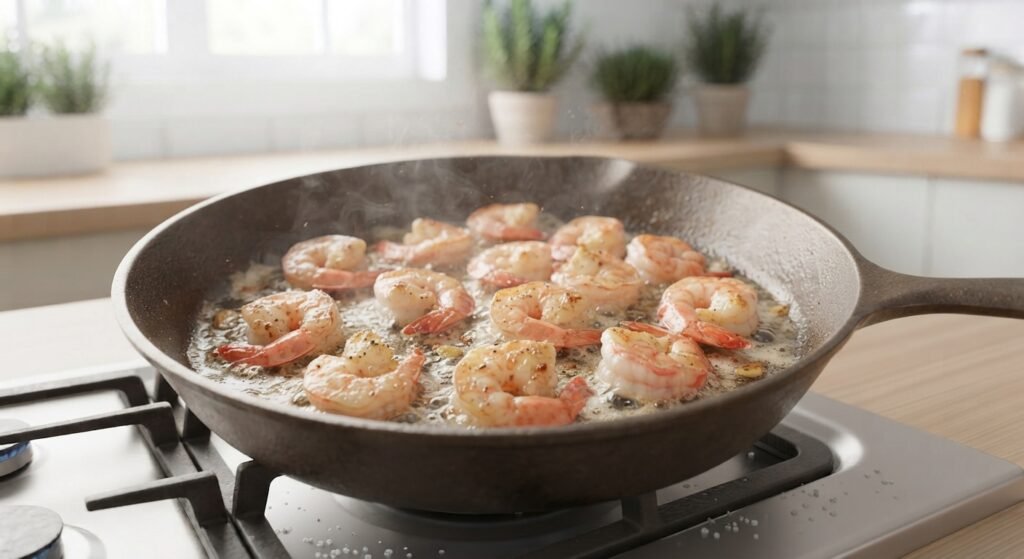
Sear the shrimp. Add the shrimp in a single layer, leaving a little space between them. Cook without moving them for 90 seconds, until the underside turns pink and lightly golden. Do not crowd the pan, and cook in two batches if needed. A fast sear is what keeps the shrimp in this garlic butter shrimp pasta recipe plump and juicy. They should curl into a loose C shape, not a tight O.
Step 6:
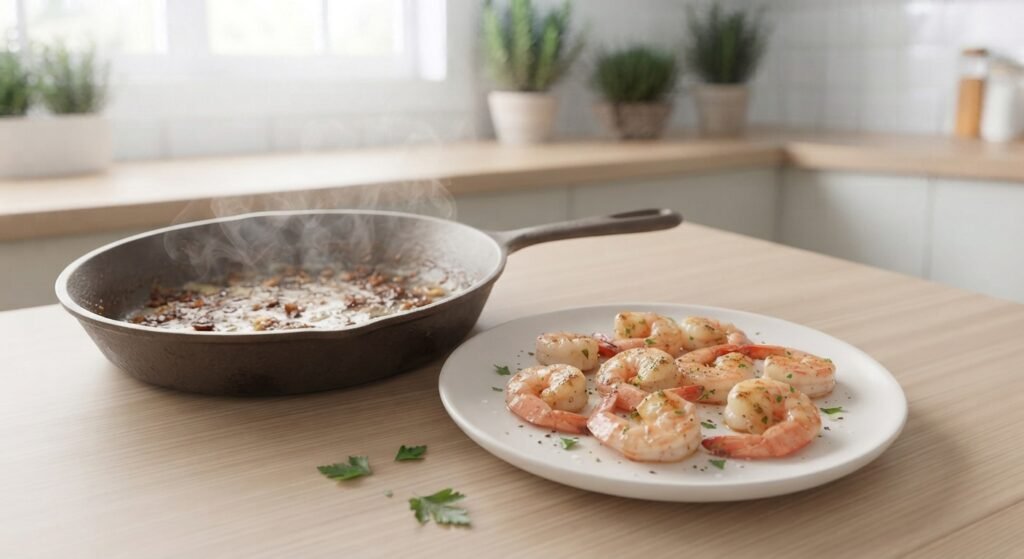
Flip and remove. Turn the shrimp over and cook for 30 to 60 seconds more, just until they turn opaque and pink all through. They should reach 63 C (145 F). Move them to a plate right away. They will not look fully done, but they finish in the sauce later. Overcooked shrimp turn rubbery, and the only way to fix them is to cook them less next time.
Step 7:
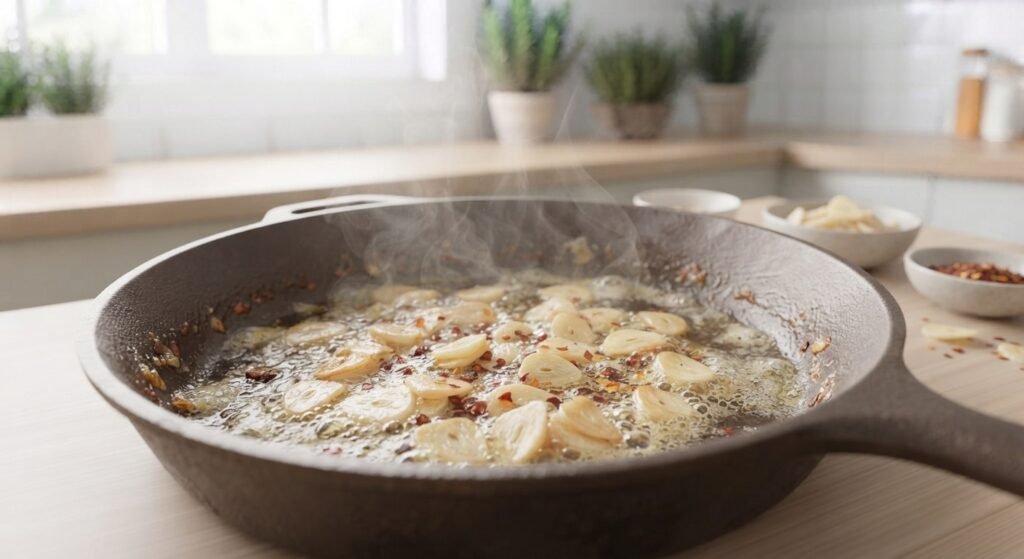
Melt the butter and garlic. Lower the heat to medium-low. Add the remaining 3 tablespoons of butter to the same pan and let it melt. Add the garlic and red pepper flakes and cook for 30 to 45 seconds, stirring, until the garlic is fragrant and just starting to turn pale gold. Keep the heat gentle, because burnt garlic ruins a garlic butter shrimp pasta recipe and gives the whole dish a bitter edge.
Step 8:
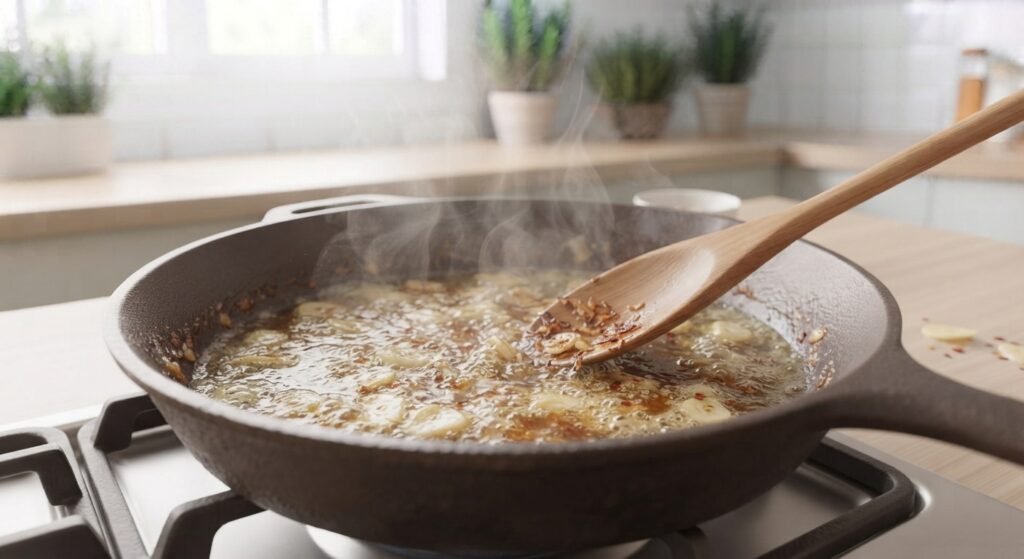
Build the sauce. Pour in the stock and lemon juice and scrape up the browned bits from the bottom with a wooden spoon. Raise the heat to medium and simmer for 2 minutes, until the liquid reduces slightly and smells rich and bright. Taste it. It should be savory, a little tangy and balanced. Add a pinch of salt if it needs it, though the Parmesan will add more later.
Step 9:
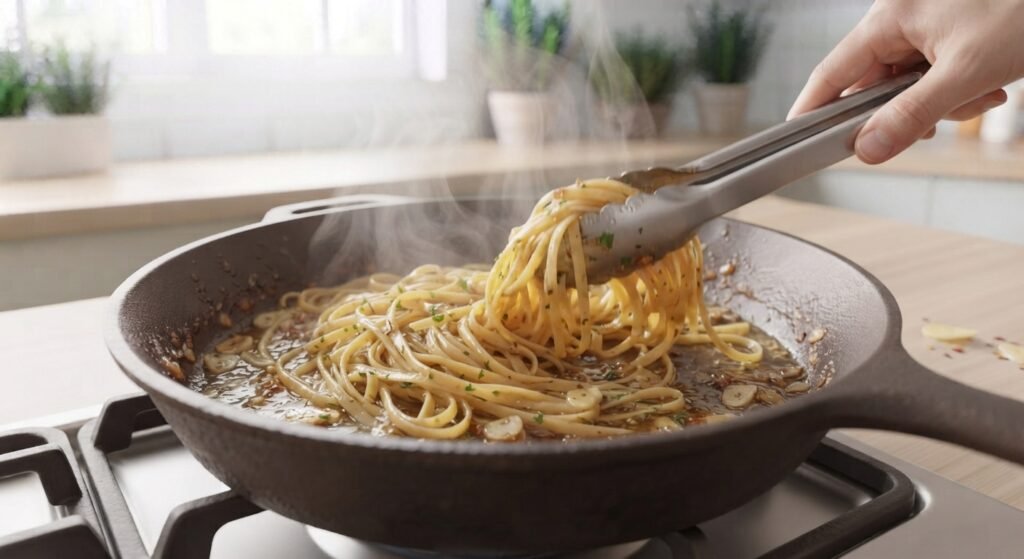
Toss in the pasta. Add the drained linguine to the skillet and toss with tongs for 1 minute so every strand is coated. Pour in about 1/2 cup of the reserved pasta water, a little at a time, and keep tossing until the sauce turns glossy and clings to the noodles. If it looks dry, add a splash more. The sauce should flow loosely and coat the pasta without pooling in the pan.
Step 10:
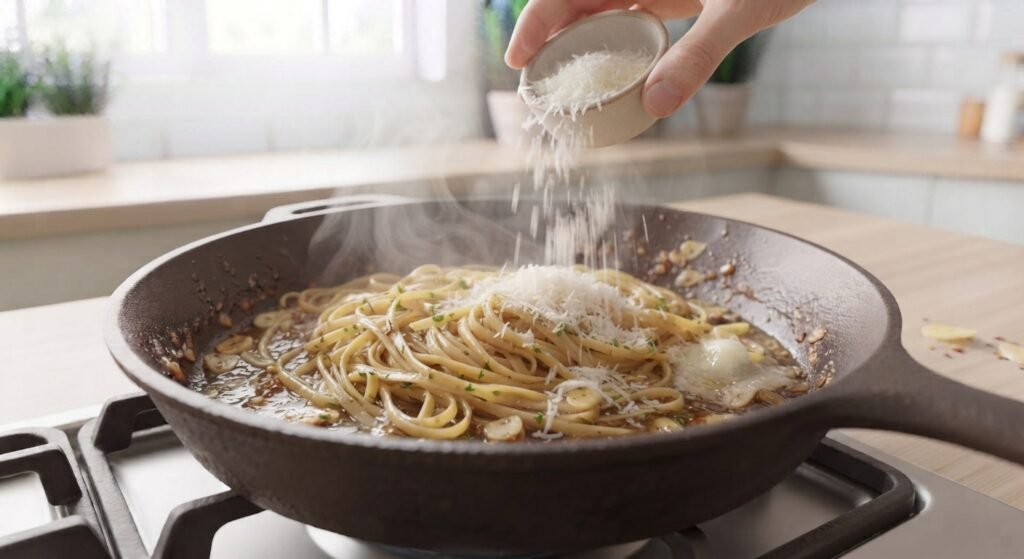
Add the Parmesan. Take the pan off the heat. Sprinkle in the grated Parmesan a handful at a time, tossing as you go, until it melts into the sauce. Adding the cheese off the heat prevents it from clumping or turning stringy. Stir in the lemon zest. The final sauce in your garlic butter shrimp pasta recipe should look silky and pale gold, with a gentle shine.
Step 11:
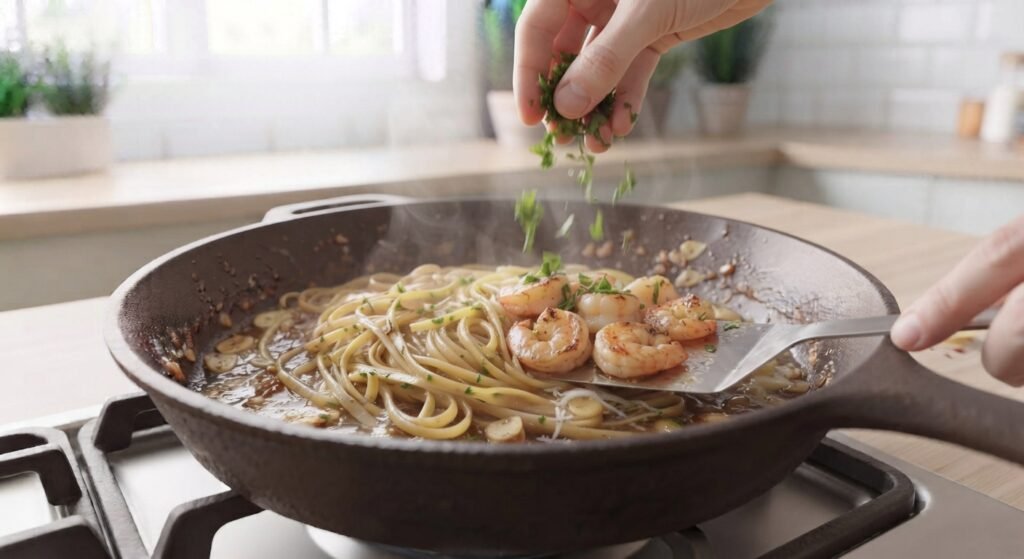
Return the shrimp. Slide the shrimp and any juices from the plate back into the pan. Toss gently for 30 seconds, just long enough to warm them through. Sprinkle in the chopped parsley and add a final squeeze of lemon. Taste and adjust the salt and pepper. Warming the shrimp for only a short time keeps them tender and stops them turning chewy.
Step 12:
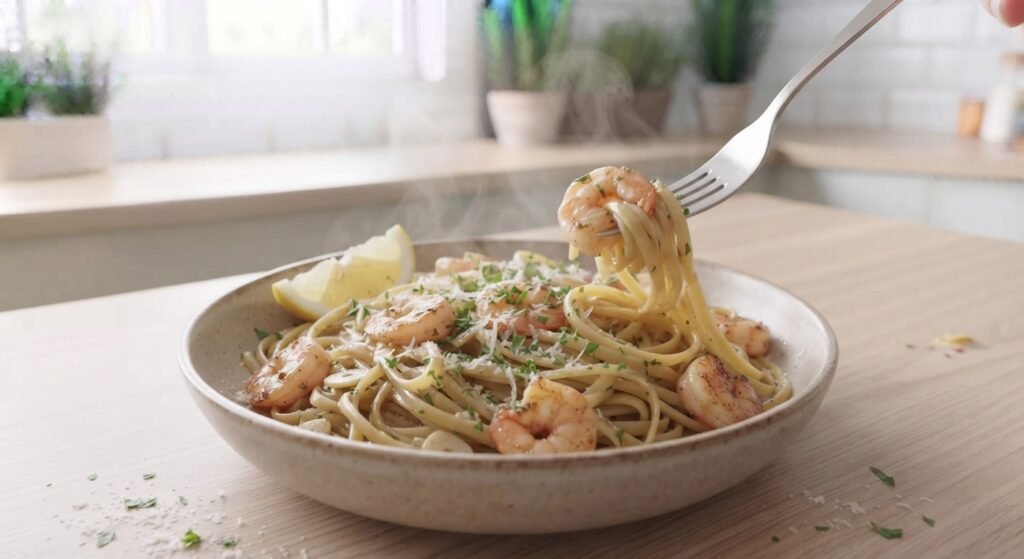
Serve hot. Divide the pasta between warm bowls, twirling it with tongs and arranging the shrimp on top. Add extra Parmesan, a pinch of parsley, lemon zest and a wedge of lemon on the side. This garlic butter shrimp pasta recipe tastes best fresh from the pan, when the sauce is silky and the shrimp are still tender. Bring it to the table straight away.
Tips for the Best Garlic Butter Shrimp Pasta Recipe
Tips That Make a Difference
Dry the shrimp thoroughly. This is the first rule of searing seafood. Wet shrimp steam, and steamed shrimp are pale and rubbery.
Do not overcook the shrimp. They need under 3 minutes in total. The moment they turn pink and opaque, take them off the heat.
Use the pasta water. The starch binds the sauce to the pasta and fixes a sauce that is too thick, without making it watery.
Add the lemon at the end. Heat dulls fresh lemon flavor. A little juice in the sauce and zest at the end gives you both depth and brightness.
Keep the heat gentle for the garlic. It cooks in less than a minute, and it burns just as fast.
This garlic butter shrimp pasta recipe is best served the moment it is ready. Warm bowls and quick serving make a visible difference.
Variations to Try
- Cherry tomato version: add a handful of halved cherry tomatoes to the pan with the garlic and cook until they soften.
- Spinach version: stir in two big handfuls of baby spinach just before the pasta goes in, and let it wilt.
- Spicy version: double the red pepper flakes and add a spoonful of chili garlic sauce to the butter.
- Creamy version: add 1/3 cup of heavy cream with the stock for a richer, silkier sauce.
- Lemon pepper version: add extra zest and a generous grind of black pepper for a bright, peppery finish.
- Zucchini noodle version: replace the pasta with spiralized zucchini and cook for only 2 minutes, for a lighter dinner.
- Wine version: replace the stock with 1/2 cup of dry white wine and let it reduce by half before adding the lemon.
Storage Tips
Shrimp pasta is best eaten fresh, but leftovers keep well if you handle them quickly. Let the pasta cool for no more than an hour, then move it to an airtight container and refrigerate. Seafood spoils faster than other proteins, so do not leave it on the counter.
In the fridge, leftovers keep for up to 2 days. Eat them within that time for the best flavor and texture. The shrimp can turn rubbery and fishy-tasting after longer storage.
Freezing the finished dish is not a good idea. The pasta turns soft, the sauce can split and the shrimp become tough. If you want to prepare ahead, freeze the raw, peeled shrimp instead. Place them in a freezer bag, press out the air and keep them for up to 3 months. Thaw them in the fridge overnight before cooking.
You can also prepare the sauce ingredients ahead. Slice the garlic, grate the cheese and zest the lemon in the morning, and keep them covered in the fridge. This garlic butter shrimp pasta recipe then takes only about 20 minutes to finish in the evening.
Label your containers with the date, so you do not have to guess how long they have been there.
Reheating Tips
Reheat gently. High heat turns shrimp tough in seconds. The best method is a skillet over low heat. Add a splash of water, stock or milk, put in the pasta and cover the pan. Heat for 3 to 5 minutes, stirring now and then, until the pasta is warm and the sauce loosens.
For the shrimp, add them only for the last minute, so they do not overcook. If the shrimp have already been mixed through the pasta, keep the heat low and the time short.
In the microwave, put a portion on a plate, sprinkle with a tablespoon of water, cover loosely and heat on medium power for 60 to 90 seconds, stirring once. Lower power protects the shrimp. Stop as soon as it is warm.
Reheat only what you plan to eat, and only once. Make sure it is steaming hot in the middle before you eat it.
A squeeze of fresh lemon, a bit of parsley and a few flakes of Parmesan help bring back the flavor that cold storage dulls.
Common Mistake to Avoid
Overcooking the shrimp. They go from tender to rubbery in under a minute. Pull them off the heat as soon as they turn pink.
Crowding the pan. Too many shrimp at once lower the temperature and release water. Cook in batches if needed.
Burning the garlic. It turns bitter in seconds. Keep the heat at medium-low and stir constantly.
Draining all the pasta water. Without the starch, the sauce slides off the noodles. Always save a cup.
Using wet shrimp. Water in the pan prevents browning. Pat them completely dry before seasoning.
Adding the cheese over high heat. It clumps and turns stringy. Take the pan off the heat first.
Skipping the lemon. Without acidity, the dish tastes flat and heavy. Add it both in the sauce and at the end.
Conclusion
A good dinner does not have to be complicated, and this garlic butter shrimp pasta recipe proves it. Sear the shrimp, build a quick garlic and lemon sauce, toss in the pasta and finish with Parmesan and parsley. That is the whole story.
Make it on a busy weeknight or for a relaxed dinner with friends. Serve it right away with crusty bread and a squeeze of lemon, and let the silky sauce do the talking.