Chicken Manchurian Recipe: Easy Crispy Restaurant Style In 2026
Chicken Manchurian Recipe – Easy & Delicious In 2026
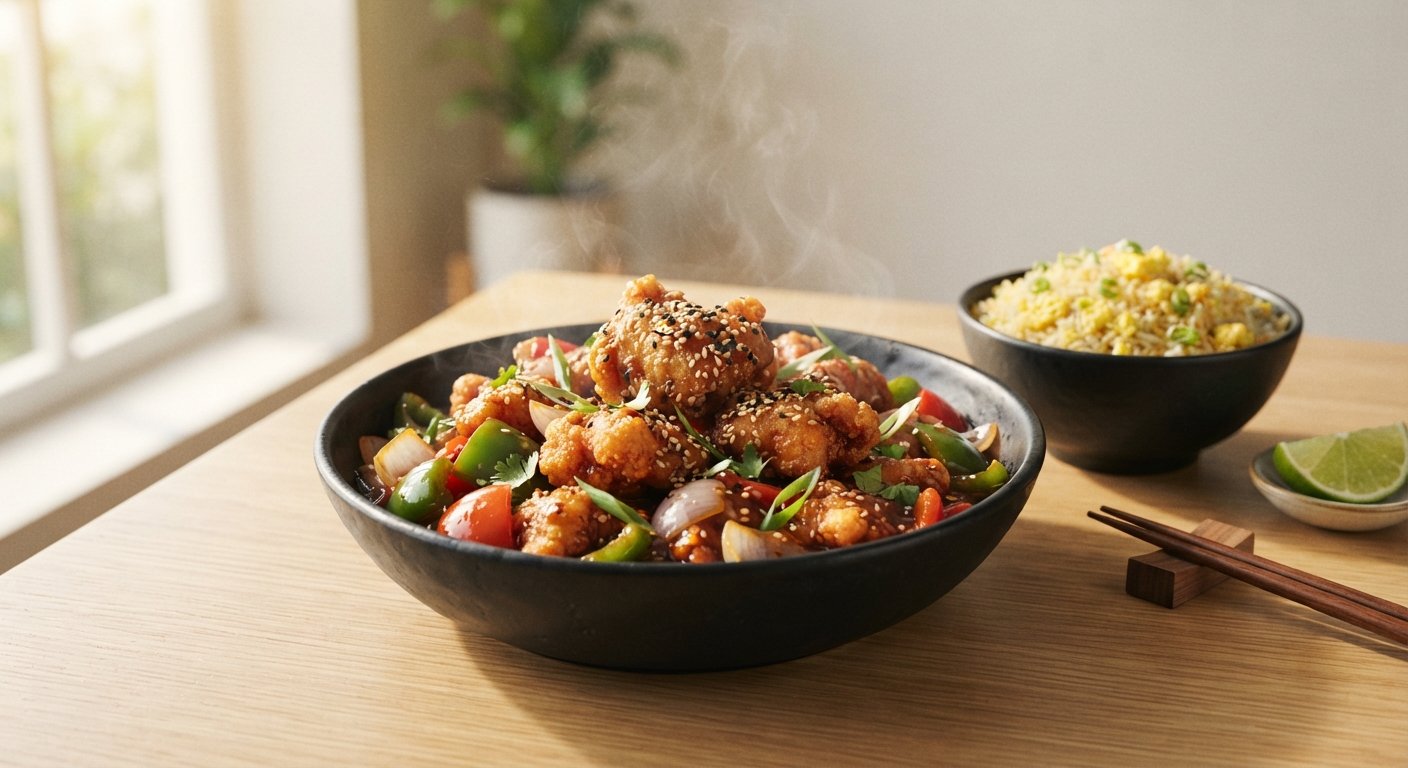
This chicken manchurian recipe is the Indo-Chinese favorite that shows up at nearly every family dinner, wedding table and takeaway menu across Pakistan and India. Crispy fried chicken pieces tossed in a glossy sauce of garlic, soy, chili and a little tang. It tastes like the restaurant version, and it is easier to make at home than most people think.
The dish was born in Indian kitchens, inspired by Chinese cooking and adapted to local tastes. That is why it has the sweet, sour, salty and spicy balance that people love. The chicken is coated in a light batter and fried until crunchy, then tossed in a sauce that clings without turning the coating soggy.
The two things that make it work are a double fry and a well-balanced sauce. Frying the chicken twice keeps it crisp even after it meets the sauce. A mix of soy sauce, chili sauce, ketchup and a splash of vinegar gives the sauce its classic flavor. Nothing here is hard, and it all uses ingredients you can find in any local store.
Serve it with egg fried rice, noodles or plain steamed rice, and it makes a satisfying dinner. It also makes a great starter for guests. If you have been hunting for a crispy chicken dinner that tastes like it came from a restaurant, this recipe is a very good place to start.
Chicken Manchurian Recipe
Ingredients
Method
- Boneless chicken. Breast gives lean, neat pieces, while thigh stays juicier and is harder to overcook. Either works well. Cut the pieces to a similar size, about 2 cm, so they cook at the same speed.

- Egg, cornflour and flour. This light batter gives the chicken its crunch. Cornflour makes it crisp, and the all-purpose flour helps it hold together. The egg binds everything. The batter should look like a thick coating, not a runny paste.
- Soy sauce. It seasons the chicken in the marinade and builds the base of the sauce. Soy sauce is salty, so taste the sauce before adding any extra salt. Dark soy sauce adds color, and a few drops can deepen the shade of the sauce.
- Red chili sauce. It brings heat and a gentle tang. Pakistani and Indian chili sauces are usually hotter than the ones sold in other countries, so adjust the amount to taste.
- Tomato ketchup. A small amount gives the sauce a rounded sweetness and a lovely reddish-brown color. It is what separates a Manchurian sauce from a plain Chinese stir fry sauce.
- White vinegar. A teaspoon adds a bright, sour note that cuts through the fried chicken. Skip it, and the sauce tastes heavy.
- Garlic, ginger and green chilies. These three are the heart of the flavor. Mince the garlic and ginger very fine so they melt into the sauce. Fresh is always better than jarred.
- Onion and capsicum. They add crunch and color. Cut them into squares and cook for only a minute or two, so they stay slightly crisp.
- Cornflour slurry. This is what thickens the sauce into a glossy coating. Mix it with cold water, never hot, or it will clump.
- Oil. Use a neutral oil with a high smoke point, such as sunflower or canola, for frying.

- Frying and saucing both move fast. Having everything chopped and measured before the oil gets hot is the best way to keep the dish relaxed and the chicken crisp.
- Pat the chicken dry with paper towels, then cut it into bite-size pieces, about 2 cm across. Uneven pieces cook unevenly, and the small ones burn while the large ones stay raw in the middle. If you are using chicken breast, cut across the grain so the pieces stay tender.
- Put the chicken in a bowl with the egg, soy sauce, ginger garlic paste, salt, pepper and chili powder. Mix well, then add the cornflour and flour. The coating should cling to each piece like a thin, sticky paste. If it looks dry, add a teaspoon of water. If it looks runny, add a spoonful of cornflour.
- Leave the coated chicken for 15 minutes at room temperature. This gives the salt and soy sauce time to flavor the meat and lets the coating set, so it does not slide off in the hot oil. Do not leave it longer than 30 minutes, because the batter can get sticky and heavy.
- Cut the onion into squares and separate the layers into petals. Cut the capsicum into similar squares. Slice the spring onions, keeping the white and green parts in separate bowls. The whites go into the pan early and the greens go on at the end. Mince the garlic and ginger very fine.
- In one bowl, combine the soy sauce, chili sauce, ketchup, vinegar, sugar and pepper. In another, whisk the cornflour with the cold water until smooth. Having both ready means you can finish the sauce in about two minutes, once the pan is hot.
- Choose a deep, heavy pan or a wok with at least 5 cm (2 inches) of oil. Keep a slotted spoon and a plate lined with paper towels nearby. Never leave hot oil unattended, and keep the pan lid close in case the oil flares. A thermometer is useful, but you can test the oil by dropping in a small bit of batter. It should rise and sizzle right away.
- Serve the chicken manchurian hot, straight from the pan, over egg fried rice or with hakka noodles. Garnish it with sesame seeds and a handful of spring onion greens. A squeeze of lime on top adds brightness.
- For a starter, pile the chicken on a plate with toothpicks, and serve it with a side of sweet chili sauce or a simple mayo dip. It is a favorite at parties because it is easy to eat with your hands.
- This chicken manchurian recipe also pairs well with a simple cucumber salad, hot and sour soup or a plate of vegetable spring rolls. If you want a full Indo-Chinese dinner, add some chili garlic noodles and a bowl of sweet corn soup.
- For a lighter plate, serve it over steamed rice with stir-fried green vegetables.

- Toss the crispy chicken in the sauce only at the last minute, right before serving. The longer it sits, the softer the coating gets.
How to Make This Chicken Manchurian Recipe Step by Step
Step 1:
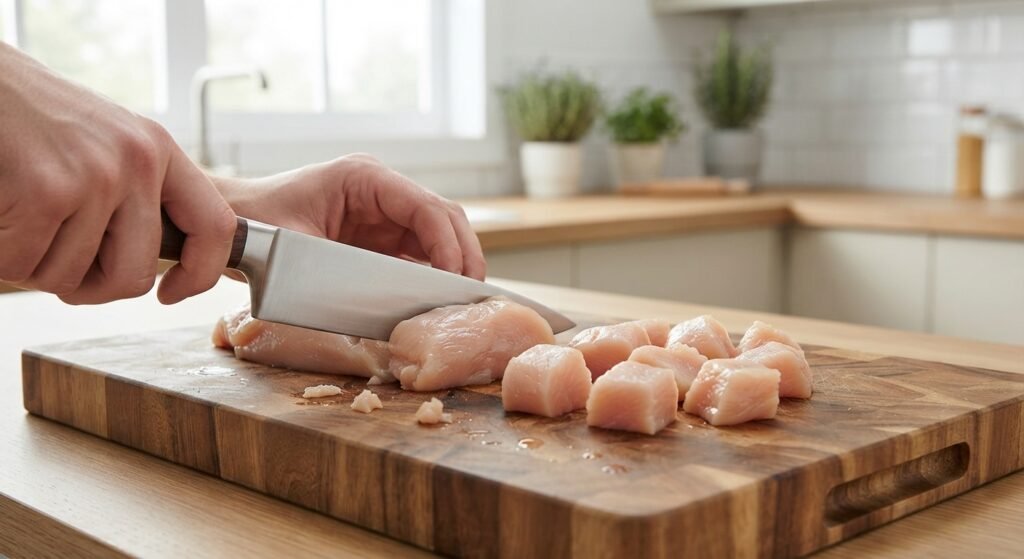
Cut the chicken. Pat the boneless chicken dry and cut it into even, bite-size pieces about 2 cm across. Trim away any fat or tough sinew. Dry chicken takes the batter better and fries crisper, so do not skip the patting step. Place the pieces in a large mixing bowl and keep them chilled until you are ready for the next step. Even pieces will cook at the same speed.
Step 2:
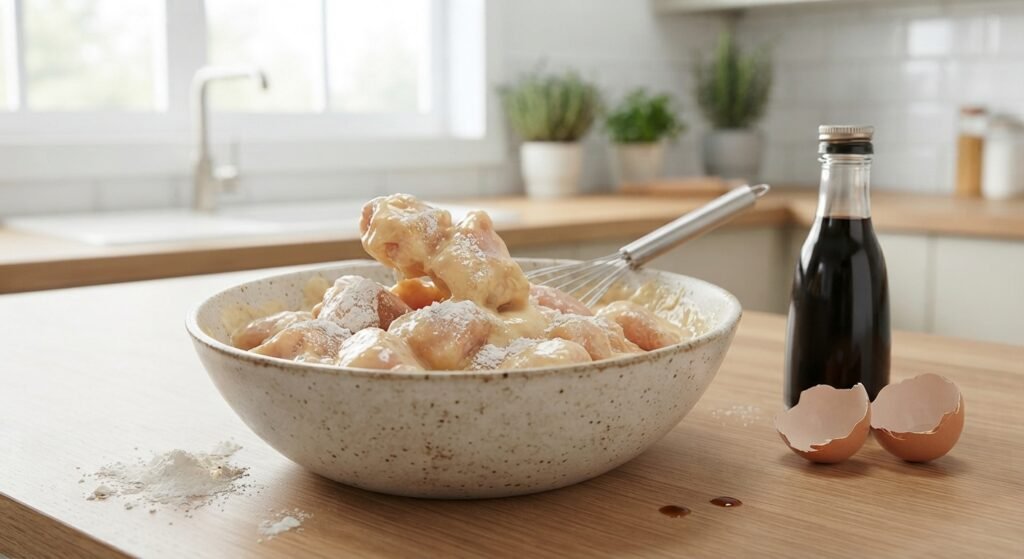
Marinate the chicken. Add the egg, soy sauce, ginger garlic paste, salt, pepper and chili powder to the chicken and mix well. Sprinkle in the cornflour and flour and stir until each piece is coated in a thick, sticky batter. Rest for 15 minutes. This short rest is what gives your chicken manchurian recipe a coating that stays on in the oil. If the batter is too dry, add a teaspoon of water.
Step 3:
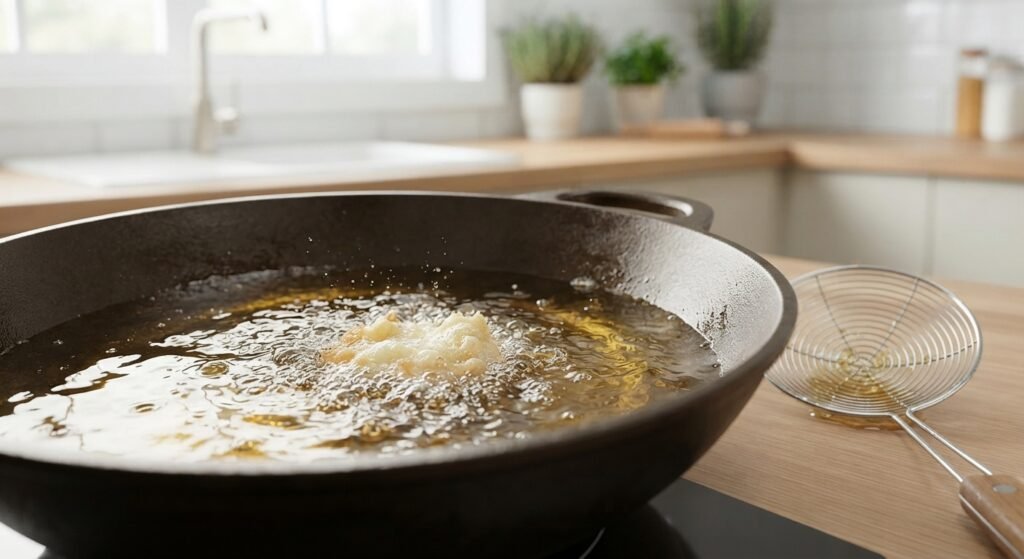
Heat the oil. Pour oil into a deep pan or wok to a depth of at least 5 cm (2 inches) and heat it over medium-high heat until it reaches about 170 C (340 F). To test, drop a small bit of batter into the oil. It should rise to the surface and sizzle gently within a few seconds. Oil that is too cool makes greasy chicken, and oil that is too hot burns the outside before the middle cooks.
Step 4:
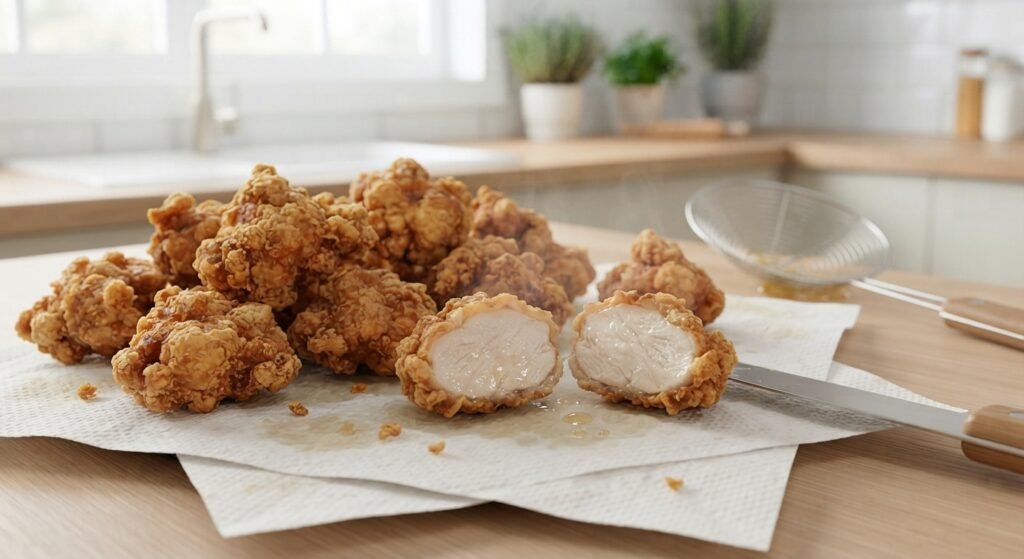
Fry the chicken once. Add the chicken to the oil one piece at a time, in batches, without crowding the pan. Fry for 4 to 5 minutes, turning now and then, until pale golden and cooked through. Lift the pieces out with a slotted spoon and drain them on paper towels. Frying in batches keeps the oil hot. This first fry is what cooks the center of your chicken manchurian recipe, so make sure each piece is done.
Step 5:
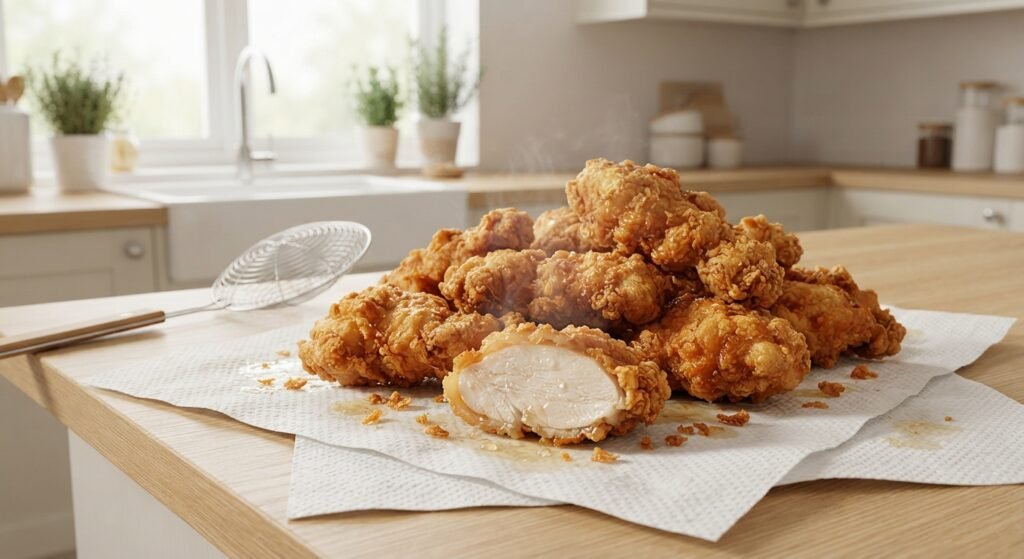
Fry a second time. Raise the heat to high and let the oil climb to about 185 C (365 F). Return all the chicken to the pan and fry for 1 to 2 minutes, until deep golden and very crisp. Drain on fresh paper towels. Double frying drives out the extra moisture from the coating, which is why restaurant chicken stays crunchy even after it is tossed in sauce. Cut open one piece to check that it is no longer pink inside.
Step 6:
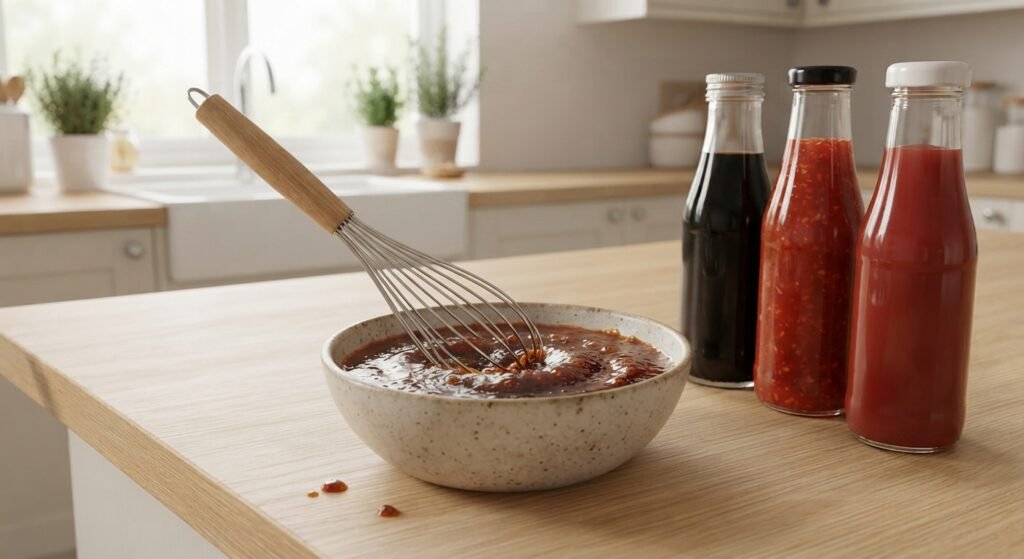
Mix the sauce. In a small bowl, stir together the soy sauce, chili sauce, ketchup, vinegar, sugar and black pepper. Taste a drop. It should be salty, a little sweet, slightly sour and spicy. Adjust the chili or ketchup to your liking. In a second bowl, whisk the cornflour with the cold water until completely smooth. Keep both bowls next to the stove, since the sauce comes together in minutes.
Step 7:
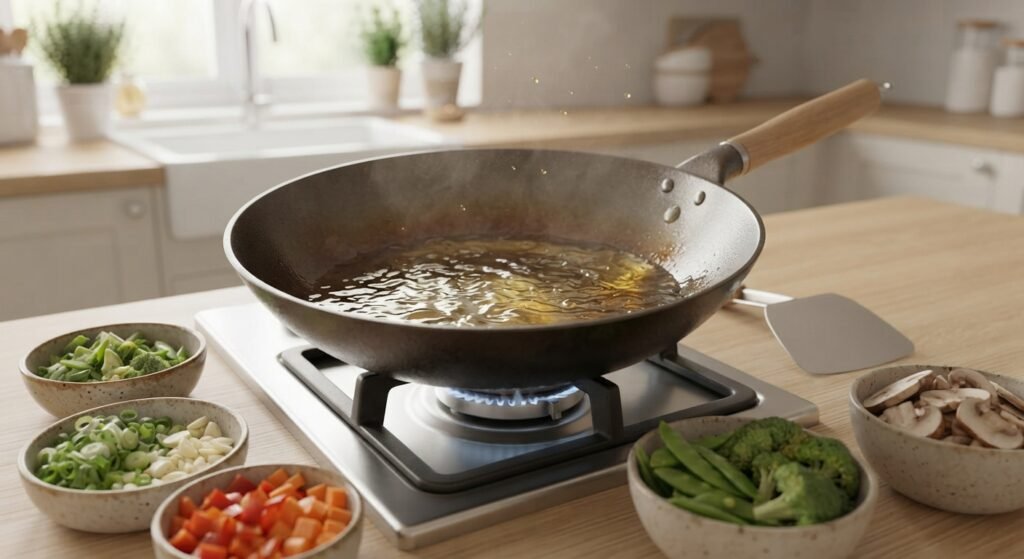
Prepare the pan for the sauce. Pour off most of the frying oil, leaving a thin film in the pan, or use a clean wok with 2 tablespoons of fresh oil. Set it over high heat for about 1 minute until the oil is shimmering. Strong heat gives the sauce its restaurant-style smoky flavor. Make sure the vegetables are chopped and the sauce bowls are within reach before you begin, because this stage goes fast.
Step 8:
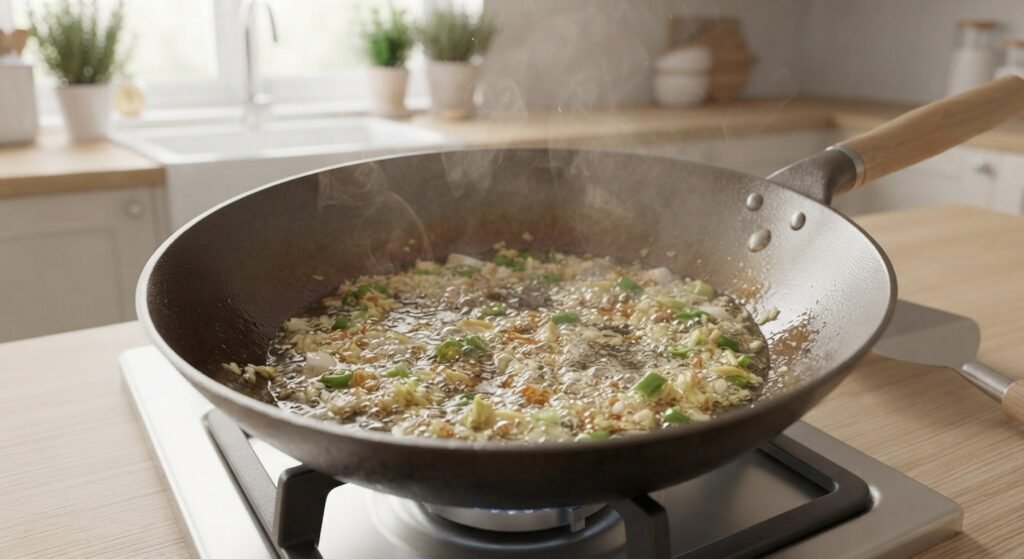
Sauté the aromatics. Add the minced garlic, ginger, green chilies and the white parts of the spring onions. Stir constantly for 30 seconds, until fragrant, but do not let the garlic brown. Browned garlic turns bitter. This quick step builds the savory base of a good chicken manchurian recipe. If the pan looks too hot, lift it off the burner for a few seconds before moving on.
Step 9:
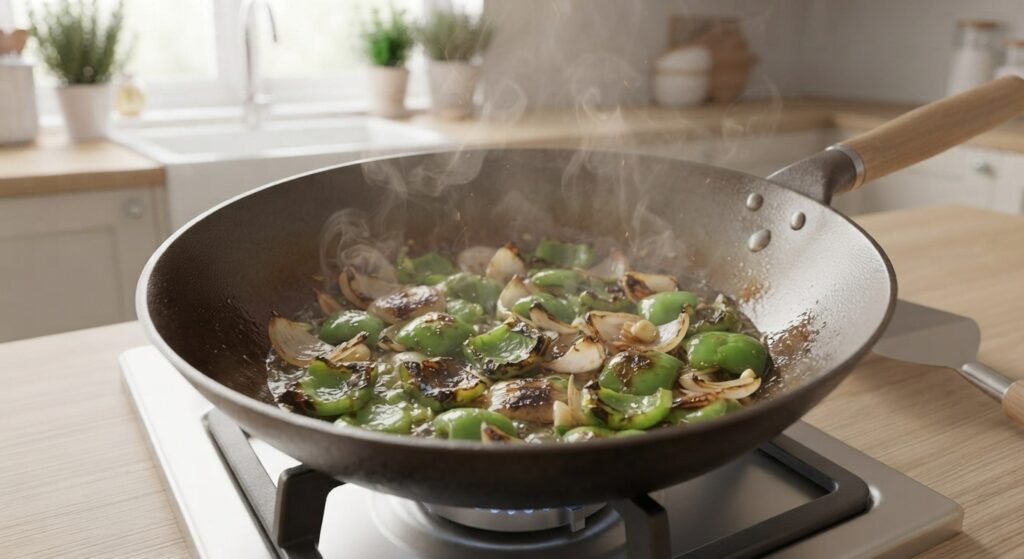
Add the onion and capsicum. Tip in the onion petals and capsicum squares and stir fry over high heat for 1 to 2 minutes. They should lose their raw edge but still have a bite. Overcooked vegetables turn watery and dull the sauce. Keep everything moving in the pan, tossing it so the pieces cook evenly. The vegetables should look bright, slightly charred at the edges and glossy.
Step 10:
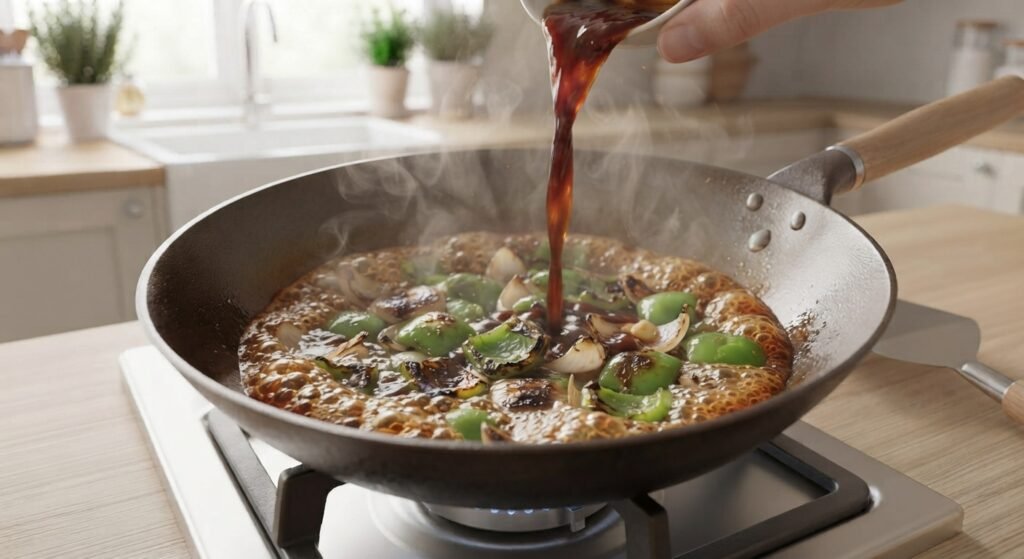
Add the sauce and simmer. Pour in the mixed sauce and the cup of water or stock. Stir well and bring it to a boil. Let it bubble for 1 to 2 minutes so the flavors blend. Taste it carefully. It should taste bold, because it will be diluted a little by the chicken. Add salt only if it needs it. Soy sauce is already salty, so most sauces for a chicken manchurian recipe need little extra.
Step 11:
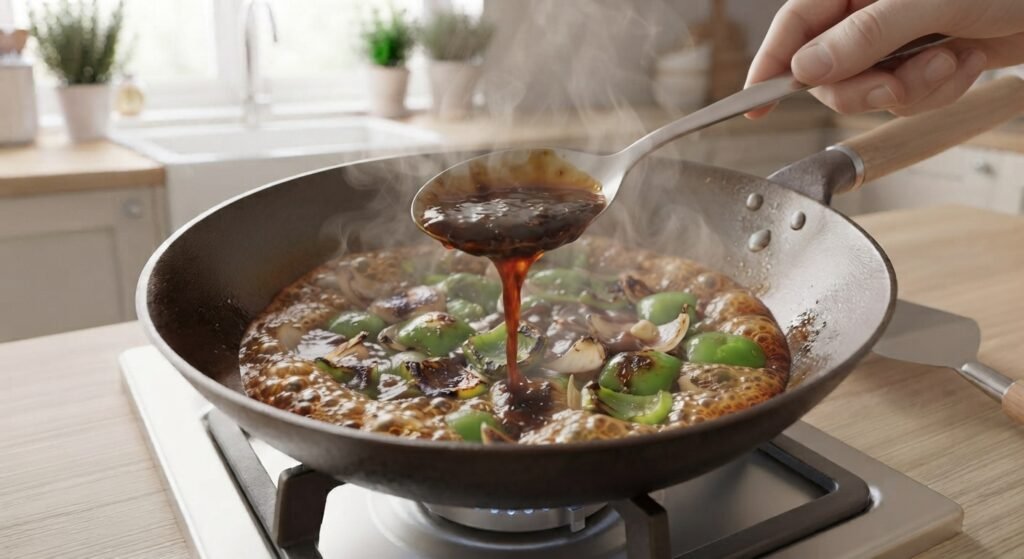
Thicken the sauce. Give the cornflour slurry a quick stir, because it settles quickly. Pour it into the boiling sauce in a thin stream while stirring. Cook for 30 to 60 seconds, until the sauce turns glossy and thick enough to coat the back of a spoon. If it gets too thick, add a splash of water. If it is too thin, cook it for another half minute. Do this off high heat if you feel it is going too quickly.
Step 12:
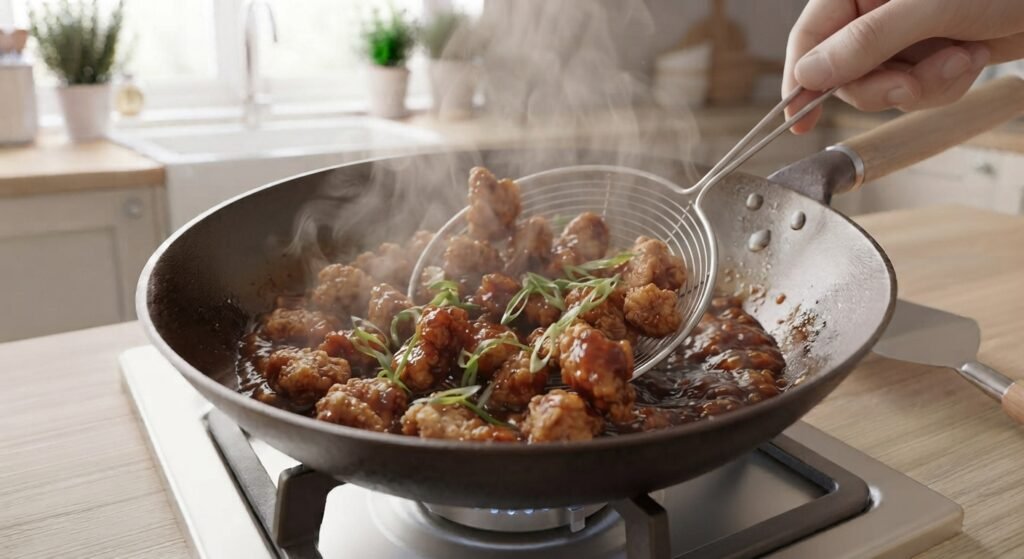
Toss and serve. Add the crispy chicken to the sauce and toss quickly for 20 to 30 seconds, only until every piece is coated. Do not let it simmer, or the coating will soften. Drizzle with sesame oil, add the spring onion greens and a sprinkle of sesame seeds. Serve right away. A fresh chicken manchurian recipe is crisp at the edges and sticky in the sauce, so bring it straight to the table.
Tips for the Best Chicken Manchurian Recipe
Tips That Make a Difference
Double fry the chicken. A first fry cooks the meat, and a second, hotter fry makes the coating crunchy. This is the biggest difference between soggy and crispy.
Keep the oil at the right temperature. Too low, and the chicken soaks up oil. Too high, and the coating burns. A thermometer helps, but the batter test works too.
Fry in small batches. Crowding the pan drops the temperature and makes the chicken greasy.
Make the sauce bold. The chicken will dilute it, so it should taste slightly stronger than you want in the end.
Toss at the last moment. A chicken manchurian recipe is only crisp for a short window, so keep everything else ready before the sauce goes in.
Use high heat for the sauce. A hot wok gives that smoky, restaurant-style taste.
Variations to Try
- Dry chicken manchurian: use only 1/2 cup of water and skip most of the slurry, so the sauce coats the chicken in a thick glaze.
- Spicy version: add 1 teaspoon of Schezwan sauce or extra green chilies for a hotter sauce.
- Honey garlic version: add 1 tablespoon of honey and extra garlic for a sweet and sticky finish.
- Air fryer version: spray the battered chicken with oil and air fry at 200 C (400 F) for 10 to 12 minutes, turning once. It is lighter, though less crisp than deep fried.
- Gobi manchurian: swap the chicken for cauliflower florets and follow the same steps for a vegetarian option.
- Paneer manchurian: use cubes of paneer instead of chicken, with a lighter batter and a shorter fry.
- Shrimp version: use peeled shrimp, and fry for 2 to 3 minutes in total.
Storage Tips
Cooked chicken manchurian is best eaten fresh, because the crisp coating softens in the sauce. If you have leftovers, let them cool for no more than an hour, then store them in an airtight container in the fridge for up to 3 days.
For the best texture, store the fried chicken and the sauce separately. Fried chicken pieces keep in the fridge for 3 days, and the sauce for 4 days. Combine them only when you are ready to serve.
For the freezer, freeze the fried, unsauced chicken on a tray first, then move it to a bag. It keeps for up to 2 months. Reheat it from frozen in a hot oven or air fryer until crisp, and make the sauce fresh.
Do not freeze chicken that has already been tossed in the sauce. The coating turns mushy when it thaws.
You can also prepare ahead. Cut and marinate the chicken in the morning, and keep it covered in the fridge. Mix the sauce ingredients and refrigerate them in a jar. When it is time to cook, the whole dish comes together in about 20 minutes.
Reheating Tips
The oven or air fryer is the best way to reheat fried chicken. Spread the pieces in a single layer and heat at 200 C (400 F) for 5 to 7 minutes, until hot and crisp again. Warm the sauce separately in a pan, then toss everything together just before serving.
If the chicken is already coated in sauce, reheat it in a hot pan over medium-high heat for 3 to 4 minutes, stirring often, with a splash of water to loosen the sauce. It will not be as crisp as fresh, but it will still taste good.
The microwave is the quickest method, though it softens the coating. Heat a portion on a plate in 45-second bursts, stirring between each. Use it only when you are short on time.
Reheat only what you plan to eat, and only once. Make sure the chicken is steaming hot all the way through before eating. A squeeze of lime and a handful of fresh spring onion greens help revive the flavor.
If the sauce has thickened in the fridge, loosen it with a spoonful of water and bring it back to a gentle boil.
Common Mistake to Avoid
Cutting uneven pieces. Small pieces burn and large ones stay raw. Keep them about 2 cm.
Skipping the double fry. A single fry leaves the coating soft once the sauce goes on. The second fry is what keeps it crisp.
Oil that is too cool. Cold oil makes the batter absorb grease and fall off the chicken. Test the temperature first.
Crowding the pan. Too many pieces at once lower the oil temperature. Fry in batches.
Overcooking the vegetables. Soft, watery vegetables thin the sauce and take away its crunch. Cook them for only 1 or 2 minutes.
Lumpy slurry. Cornflour mixed with warm water clumps. Always mix it with cold water and stir again before pouring.
Letting the chicken sit in the sauce. The coating gets soggy within minutes. Toss it just before serving.
Conclusion
A good plate of crispy chicken does not need to be hard, and this chicken manchurian recipe proves it. Coat the chicken, fry it twice, make a bold garlic and soy sauce and toss it all together at the last minute. That is the whole story.
Make it for a family dinner or a small gathering. Serve it with fried rice and a squeeze of lime, and let the crispy, sticky chicken speak for itself.