Daal Chawal Recipe: Easy 45-Minute Homestyle Dinner
Daal Chawal Recipe – Easy & Delicious In 2026
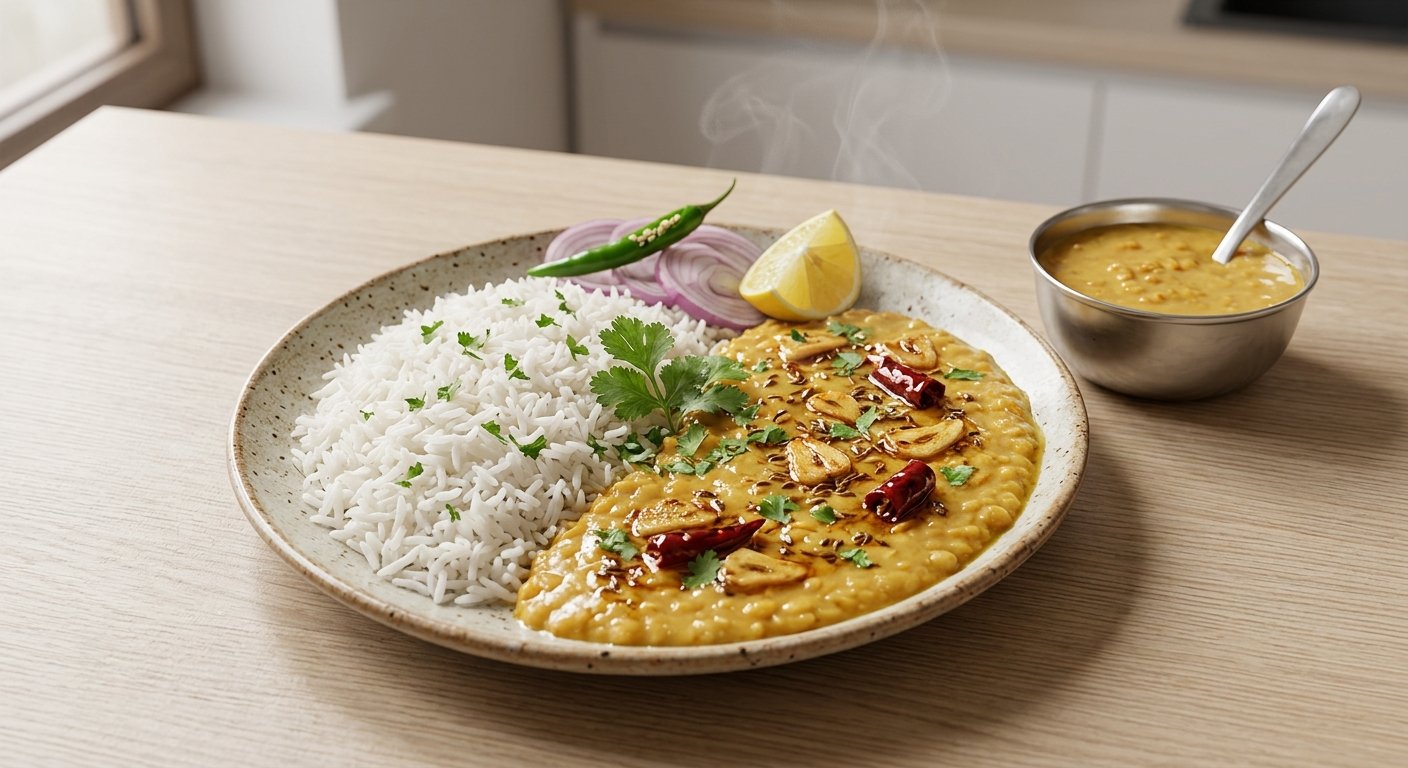
This daal chawal recipe is the kind of dinner that never asks for much and never lets you down. A pot of soft, golden lentils, a plate of fluffy rice, and a sizzling tarka poured over the top. That is the whole meal, and in many Pakistani and Indian homes it lands on the table at least once a week.
It is the food people crave when they are tired, a little homesick, or just want something warm and plain without any fuss. Nobody gets bored of it, because the daal changes with every tarka you make. Garlic and cumin one day, dried red chilies the next, a handful of fried onions when you want it richer.
The method here is simple. Rinse the lentils, boil them with turmeric and a tomato until they turn creamy, then finish with a hot tarka. Cook the rice separately so every grain stays loose and fluffy. In about 45 minutes you have a full dinner for the family, with very little to wash up afterwards.
If your daal has ever turned out watery or flat, this version should fix that. It uses a mix of moong and masoor daal for body, a small tomato for a gentle tang, and a two-step tarka so the spices taste toasted and not raw. It is an easy daal dinner for a weeknight, needs no special ingredients, and is mild enough for kids too.
Daal chawal recipe
Ingredients
Method
- Moong and masoor daal together. Moong daal is light and holds a little texture. Masoor melts into a creamy body within minutes. Using both gives you a daal that is smooth but not pasty. If you only have one, moong alone is milder and masoor alone is thicker and quicker.

- Turmeric. Just a half teaspoon. It gives the golden color and a mild earthy note. More than that and the daal starts to taste like medicine.
- Tomato and onion in the pot. These cook down with the lentils and give the base a soft sweetness and a little acidity. Fresh tomato is better than canned here, because canned tomato can turn the daal sour once it is simmered for a while.
- Ginger and green chilies. The ginger keeps the daal light on the stomach, and the chilies give a quiet heat. Slit them instead of chopping if you want flavor without too much spice.
- Ghee or oil. Ghee gives a nutty, rounded finish and is my pick for a proper daal chawal recipe. Oil works well too, and it is the better choice if you want a lighter or dairy-free meal.
- Cumin and garlic. These two carry the tarka. Cumin should crackle and darken slightly. Garlic should turn golden, not brown. Brown garlic tastes bitter.
- Kashmiri red chili powder. It adds a deep red color without too much heat. Regular chili powder works, but start with a quarter teaspoon.
- Basmati rice. Long, slender grains that stay separate and smell lovely as they cook. Aged basmati is best. Ordinary long grain rice also works, but it tends to clump.
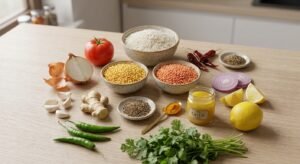
- This is a quick dish, but it moves fast once the pot is on. Spending ten minutes on prep means the cooking part feels calm.
- Put both daals in a bowl and cover with cold water. Rub them between your palms and drain. Repeat until the water runs almost clear, usually three or four rinses. Then cover with fresh water and let it sit for 20 minutes. Soaking is optional. If you are in a hurry, skip it and just add 10 minutes to the cooking time. If you have the time, do it. Soaked lentils cook evenly and turn creamier.
- Place the basmati in a large bowl and fill with cold water. Swirl it with your fingers, pour off the cloudy water and repeat until it runs mostly clear. Be gentle. Basmati grains are long and delicate, and rough handling snaps them. Soak the rice for 20 minutes while the daal soaks, then drain well.
- Chop the tomato and the small onion for the pot into rough pieces. They will dissolve, so neatness does not matter. For the tarka, slice the larger onion thin and the garlic thin too. Thin slices fry evenly and go crisp. Thick garlic slices stay soft in the middle.
- Rice does best with a measured amount of water. For soaked basmati, 1 1/2 times the volume of rice is a good starting point. Daal is more forgiving. Start with 4 cups and keep a kettle of hot water nearby. Lentils drink more water as they sit, so you will almost always need a splash later.
- Place the ghee, cumin, dried chilies, red chili powder and garam masala next to the stove in small bowls. The tarka takes about three minutes, and spices burn in seconds. You do not want to be hunting for a spoon while the garlic is browning.
- A medium, heavy-bottomed pot works best for the daal. Thin pots scorch at the bottom and let steam escape too fast. For the rice, a pot with a tight-fitting lid is a must. If your lid is loose, put a clean kitchen towel under it to hold the steam in.
- Serve the rice and daal together on one plate, with a little daal poured over the rice and extra daal in a small bowl on the side. Squeeze lemon over the top. Add sliced raw onion, a green chili and a spoon of pickle for crunch and sourness. A simple bowl of yogurt or cucumber raita cools the plate nicely. Some families also like a fried egg, a seekh kebab or a plate of crispy fried okra alongside. If you are serving a full desi dinner, this daal chawal recipe pairs well with a dry vegetable like aloo gobi or a quick bhindi fry. For a lighter meal, serve the daal with brown rice or with a roti instead. Both are good. White basmati is still the classic.

- Pour the hot tarka over the daal at the table, just before serving. The sizzle makes it taste fresher, and the garlic and cumin stay crisp instead of going soggy in the pot.
How to Make This Daal Chawal Recipe Step by Step
Step 1: Rinsing moong and masoor daal for daal chawal

Rinse and soak the daal. Put the moong and masoor daal in a bowl, cover with cold water and rub the lentils between your palms. Drain and repeat three or four times until the water runs nearly clear. Cover with fresh water and soak for 20 minutes if you have the time. This small step makes the whole daal chawal recipe creamier and shortens the cooking. Drain the lentils well before they go into the pot, so you do not dilute the flavors.
Step 2: Daal with tomato and onion coming to a boil
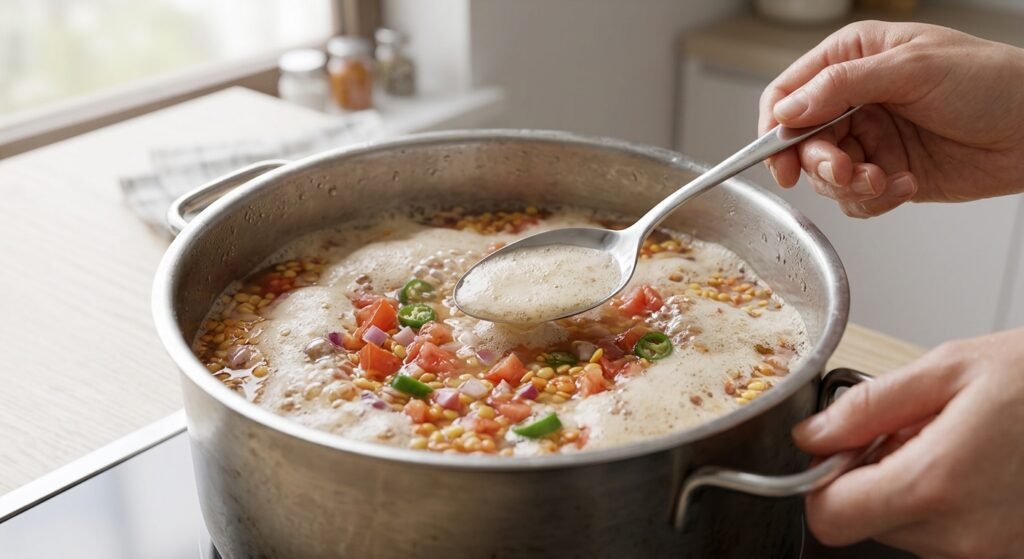
Boil the daal. Add the drained lentils to a medium pot with 4 cups of water, the turmeric, salt, chopped tomato, chopped onion, slit green chilies and grated ginger. Set the pot over high heat and bring it to a boil. As soon as it boils, a pale foam will gather on top. Skim it off with a spoon, because the foam can make the daal taste slightly bitter and can cause it to boil over later.
Step 3: Daal simmering until soft for daal chawal recipe
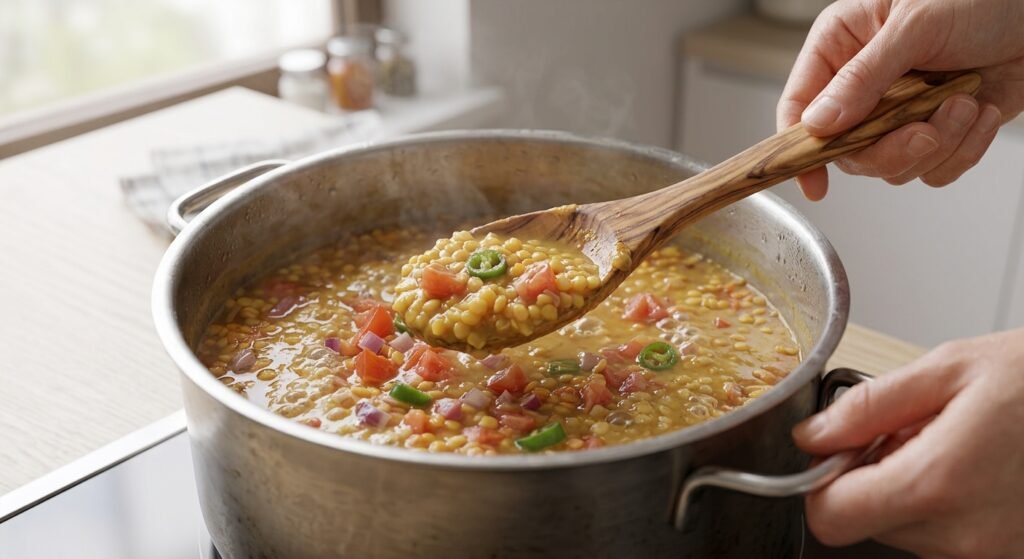
Simmer until soft. Reduce the heat to low, partly cover the pot and let the daal simmer for 20 to 25 minutes, stirring every 5 minutes. Keep the lid slightly open, or the pot will boil over. The lentils are ready when they fall apart easily when pressed between two fingers and the tomato has melted into the liquid. If the water drops too low, add half a cup of hot water. A good daal chawal recipe needs a pourable, soupy daal, not a thick paste.
Step 4: Mashing creamy daal with a whisk
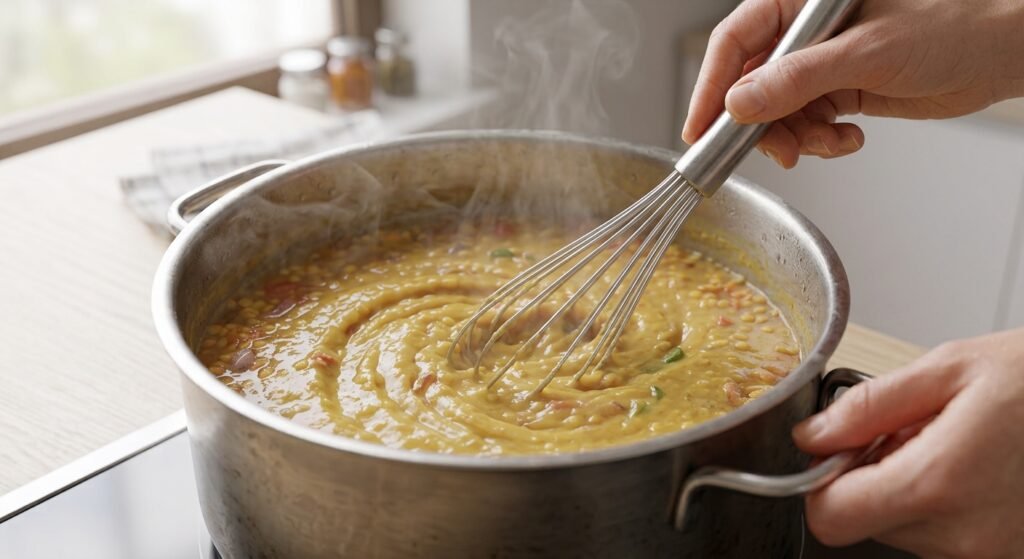
Mash and adjust the texture. Take the pot off the heat. Use a wire whisk or the back of a ladle to mash the lentils until the daal turns creamy and mostly smooth. A few whole pieces are fine, even nice. Taste it and add salt if needed. You want a consistency that flows slowly off a spoon. Too thick, it eats like porridge. Too thin, it tastes flat. Loosen with hot water if needed and keep the pot warm over the lowest heat.
Step 5: Basmati rice starting to cook with bay leaf and cardamom
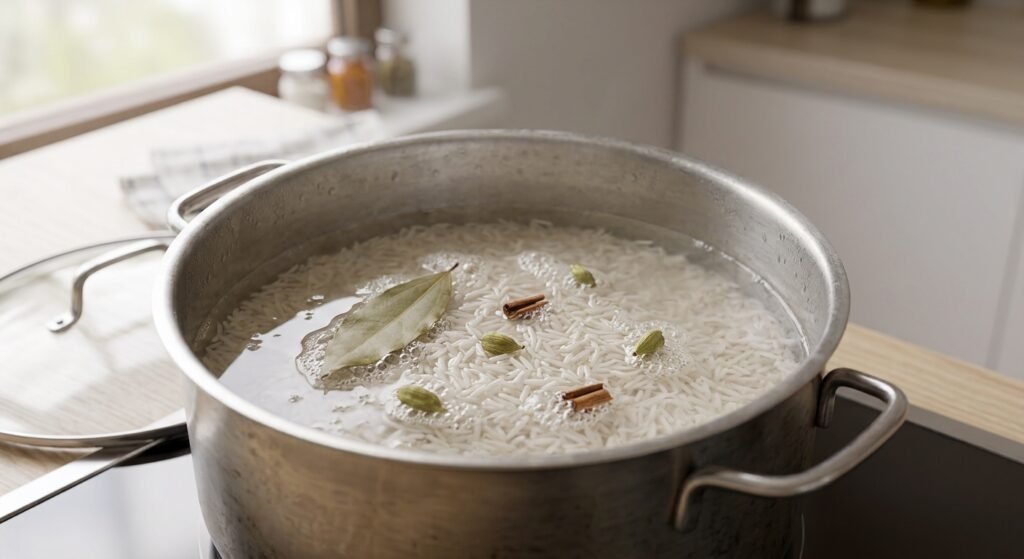
Start the rice. Drain the soaked rice and add it to a pot with 2 1/4 cups of water, salt, ghee, the bay leaf and the cardamom pods. Bring it to a rolling boil over high heat without stirring. Boil for 2 minutes, then reduce the heat to the lowest setting. Cover the pot tightly with a lid. This is the simplest way to get fluffy rice for your daal chawal recipe, and it needs no draining and no guesswork.
Step 6: Fluffing steamed basmati rice with a fork
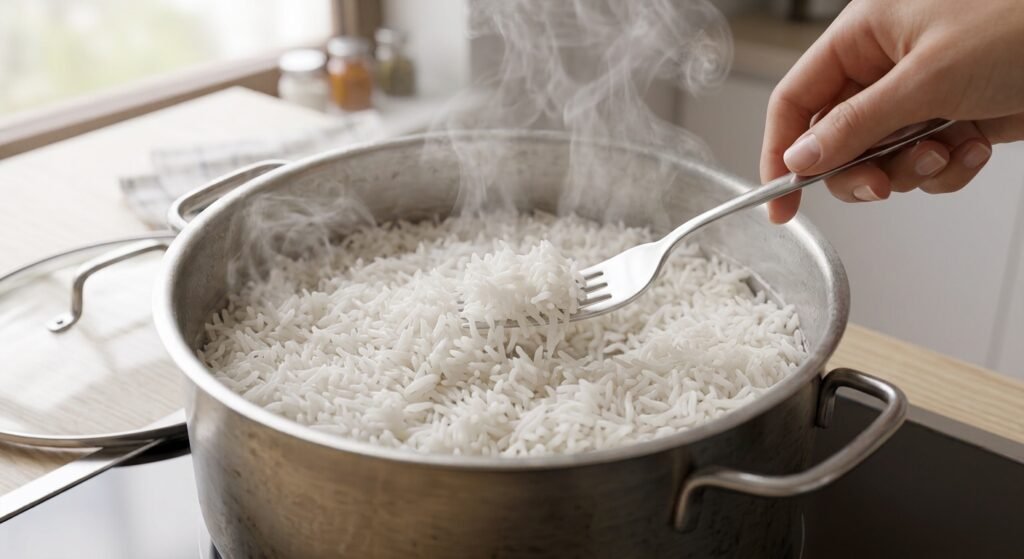
Steam and rest the rice. Let the rice cook undisturbed for 12 to 15 minutes. Do not lift the lid and do not stir, because the steam is doing the work. When the time is up, turn off the heat and let the rice rest, still covered, for 10 minutes. Fluff gently with a fork, lifting the grains from the bottom. The grains should be long, separate and soft, with a light, clean smell.
Step 7: Frying onion in ghee for daal tarka
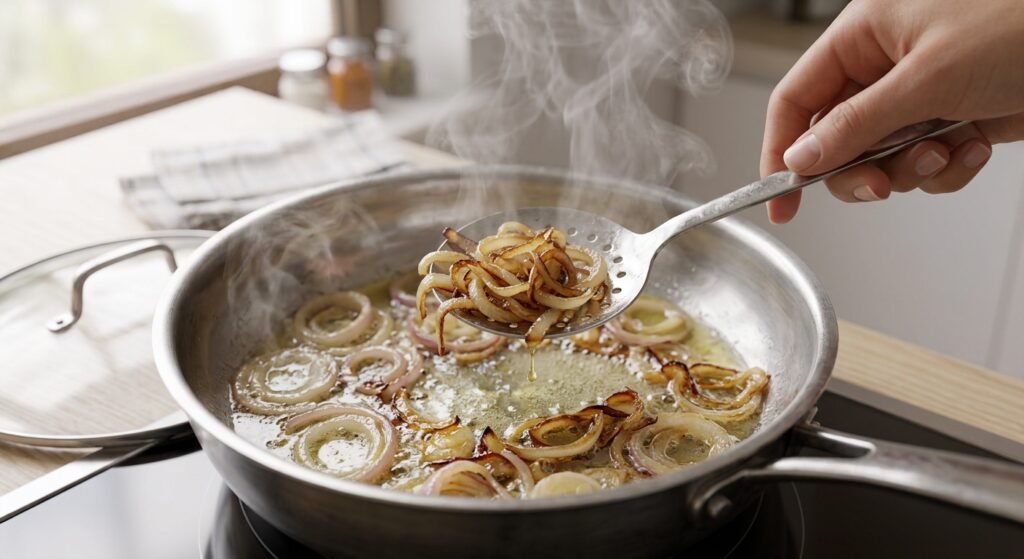
Fry the onion for the tarka. Heat the ghee in a small pan over medium heat. Add the thinly sliced onion and fry for 5 to 6 minutes, stirring often, until it turns golden brown at the edges. Take your time here. Pale onion tastes raw, and burnt onion tastes bitter. Golden is the target. Lift out half the onion with a slotted spoon and keep it aside for topping. This crisp onion is what lifts a plain daal chawal recipe into something special.
Step 8: Cumin, garlic and red chilies sizzling for tarka
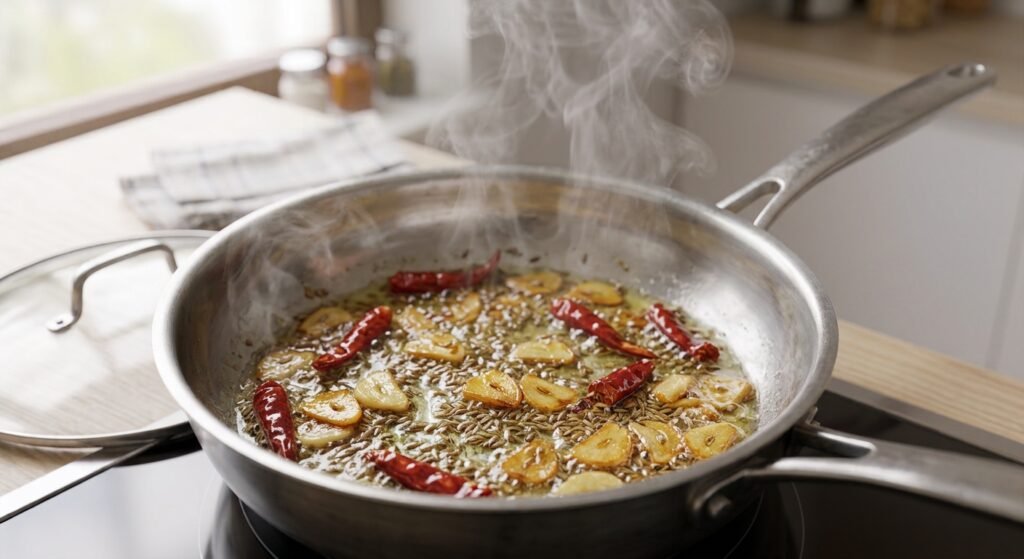
Add cumin, garlic and chilies. To the same pan, add the cumin seeds and let them crackle for 10 seconds. Add the sliced garlic and the dried red chilies and fry for 30 to 40 seconds, just until the garlic turns pale gold. Keep the heat at medium. Garlic goes from golden to bitter in a few seconds, so stay at the stove. The kitchen should smell warm and toasty, not sharp or burnt.
Step 9: Red chili powder stirred into hot tarka
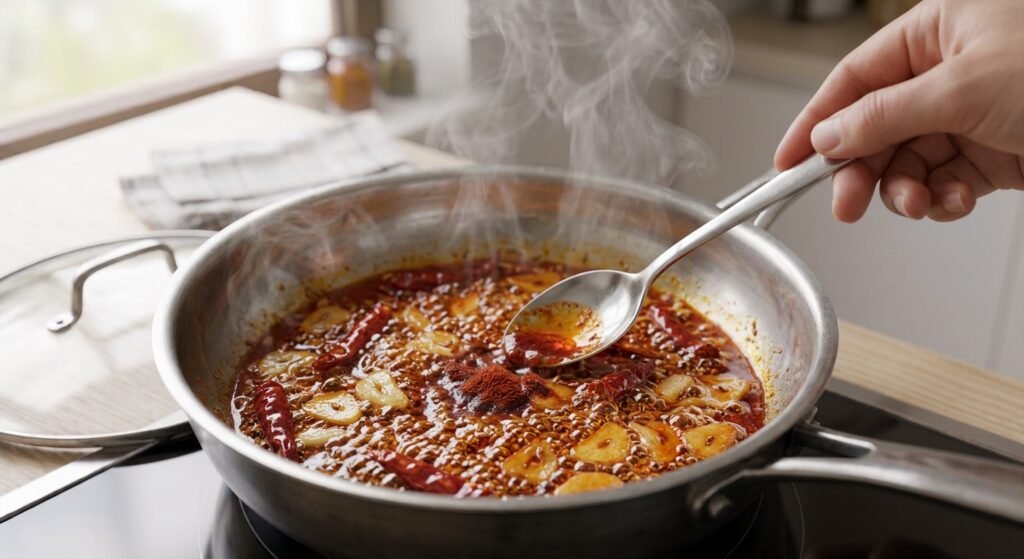
Finish the tarka with spice. Take the pan off the heat for a moment, then stir in the Kashmiri red chili powder and the garam masala. The residual heat blooms the spices without burning them, and the ghee turns a deep red. Return the half portion of fried onion to the pan and stir once. If you add chili powder over direct high heat, it scorches in seconds and makes the tarka bitter, so do not skip this short pause.
Step 10: Pouring hot tarka over creamy daal

Combine daal and tarka. Reheat the daal if it has cooled, and check the consistency once more. Pour about three quarters of the hot tarka into the pot and stir gently. Taste again and add salt or a squeeze of lemon if needed. Keep the rest of the tarka for pouring over each bowl at the table. This two-part method gives you flavor all the way through the daal and a fresh sizzle at the top.
Step 11: Plated daal chawal recipe with fresh coriander and lemon
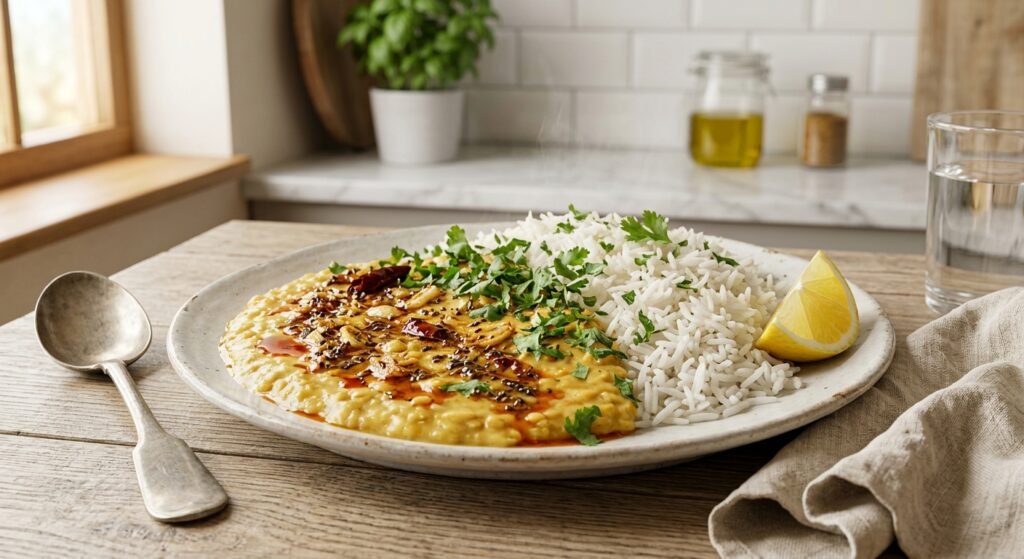
Plate the rice and daal. Spoon a mound of fluffy rice onto a warm plate and ladle daal alongside or over it. Spoon the remaining tarka on top, letting the garlic, chilies and onion scatter across the surface. Add chopped fresh coriander and a lemon wedge. Done properly, this daal chawal recipe looks simple on the plate and tastes layered, with soft lentils, loose rice and a bit of crunch from the onion.
Step 12: Family table with daal chawal, raita and pickle

Serve hot. Bring the plates to the table straight away, with raw onion, green chilies, pickle and yogurt on the side. Daal thickens as it sits, so serve it while it is still loose and glossy. Let everyone squeeze their own lemon and add their own heat. Warm plates help keep the food hot longer. Leftover daal, if there is any, will be even better tomorrow.
Tips for the Best Daal Chawal Recipe
Tips That Make a Difference
Salt in two stages. Add most of it while the daal boils, then adjust after mashing. Daal tastes flatter than you expect when it is hot, so taste before you serve.
Do not cut corners on the tarka. It is the most important part of a good daal chawal recipe. Fresh ghee, fresh garlic and spices that smell lively make a big difference.
Use hot water to adjust the daal, never cold. Cold water drops the temperature and can leave the lentils tasting dull.
Keep the lid slightly open while the daal simmers. A fully covered pot of lentils foams over and makes a mess of the stove.
Rest the rice. Those 10 minutes off the heat let the grains firm up and finish steaming. Rice that is served straight from the flame tends to be sticky.
Match the daal to the mood. For a light dinner, keep the tarka simple. For a weekend meal, add extra fried onion and a spoon of ghee on top.
Variations to Try
- Spicy version: add 2 extra green chilies to the pot and double the dried red chilies in the tarka.
- Palak daal: stir in a big handful of chopped spinach 5 minutes before the daal is done.
- Lemony daal: finish with the juice of a whole lemon and a pinch of sugar for a sweet and sour balance.
- Dhaba style: add a pinch of asafoetida (hing) and a teaspoon of crushed coriander seeds to the tarka for a smoky, roadside flavor.
- Mixed lentil version: swap in chana daal for half the masoor. It takes longer to cook but gives a nuttier bite.
- Vegan version: use oil instead of ghee. The daal still tastes rich if you do not skimp on the onion.
- Jeera rice: fry a teaspoon of cumin in ghee and cook the rice in the same pot for a fragrant, restaurant-style side.
Storage Tips
Let the daal and the rice cool separately at room temperature for no more than an hour. Then pack them into airtight containers. Storing them apart keeps the rice from absorbing moisture from the daal and turning mushy.
In the fridge, daal keeps well for up to 4 days. Rice should be eaten within 2 days, because cooked rice can spoil faster if it is left warm or stored badly. Cool it quickly and get it into the fridge.
Daal freezes beautifully. Portion it into containers or freezer bags, leave a little room at the top and freeze for up to 3 months. If you plan to freeze it, leave out the final tarka and make that fresh when you reheat. Rice can be frozen too, for up to a month, in flat bags that thaw fast.
Daal thickens a lot in the fridge, because the lentils keep soaking up liquid. That is normal. A splash of water fixes it. Label your containers with the date so you are not guessing later.
Reheating Tips
For daal, the stovetop is the best method. Pour it into a pot, add a few tablespoons of water and warm it over low to medium heat, stirring often, until it is hot all the way through. Avoid a hard boil, which makes it spit and stick.
In the microwave, heat a bowl in 60-second bursts and stir between each round. Cover it loosely to avoid splatter, and add a spoonful of water if it looks stiff.
For rice, sprinkle a tablespoon of water over a bowlful, cover it and microwave for about 90 seconds. The steam brings the grains back to life. Stir with a fork and check that it is steaming hot in the middle. Only reheat rice once.
Daal loses a bit of its brightness in cold storage. Once it is hot, make a small fresh tarka with a teaspoon of ghee, a few slices of garlic and a pinch of cumin, and pour it on top. Add a squeeze of lemon. It tastes like it was made fresh.
Common Mistake to Avoid
Not rinsing the daal. Unrinsed lentils bring extra starch, more foam and a dusty flavor. Rinse until the water runs nearly clear.
Adding too little water. Daal drinks as it cooks. If it is dry and sticky, it will scorch at the bottom. Keep hot water ready.
Burning the garlic. Garlic turns bitter faster than anything else in the pan. Pull it at pale gold, because it keeps cooking in the hot ghee.
Skipping the rice rest. Serving rice straight from the flame makes it sticky and wet. Let it sit, covered, for 10 minutes.
Stirring the rice. Stirring breaks the long grains and releases starch. Once the lid is on, leave it alone.
Using old spices. Stale cumin and chili powder make the whole tarka taste dull. If a spice does not smell like anything, replace it.
Salting only at the end. Salt that goes in late sits on top of the daal instead of seasoning the lentils. Add most of it at the start.
Conclusion
A good bowl of daal and rice does not need to be complicated, and this daal chawal recipe proves it. Rinse the lentils, simmer until creamy, steam the rice properly and finish with a sizzling tarka. That is the whole story.
Make a pot on a busy weekday and keep a few portions in the freezer for later. Serve it with lemon, raw onion and a spoon of pickle, and let the plate do the talking.