Turkish Lentil Soup Recipe: Easy 40-Minute Comfort
Turkish Lentil Soup Recipe – Easy & Delicious In 2026
This Turkish lentil soup recipe is made for the evenings when the day has been long and dinner still needs to happen. Red lentils, a few vegetables, a handful of pantry spices, and about forty minutes. No soaking, no slow simmer, no special equipment beyond a pot and something to blend with. The soup turns silky all on its own, so you never need cream or a long list of extras to make it taste full.
In Turkey it is called mercimek çorbası, and you will find it on nearly every restaurant table and home stove across the country. It is often the first thing served at a meal, with a lemon wedge on the side and bread within reach. The version here is smooth, gently tangy, lightly spiced, and finished with a spoonful of sizzling paprika butter that makes a humble pot of lentils feel like something special.
It also suits a busy week. One pot, simple chopping, a quick blend, and you are done. It stores well, freezes well, and tastes even better the next day once the spices settle in. If you have been hunting for an easy lentil soup that works as a real meal and not just a starter, this Turkish red lentil soup is a very good place to begin.

Turkish lentil soup recipe
Ingredients
Method
- Split red lentils. These cook in about 20 minutes and collapse into a smooth body without any help. Green and brown lentils hold their shape and give a grainier soup, so save them for salads. Rinse the red ones until the water runs mostly clear.

- Onion, carrot and potato. The onion is the sweet base. The carrot adds color and a gentle sweetness. The potato is the quiet worker here, giving the soup a creamy feel without any cream. You can leave it out, but I would not.
- Tomato paste and red pepper paste. Tomato paste deepens the color and adds a mild savory tang. Turkish red pepper paste, called biber salçası, brings a warm, slightly smoky depth. If you cannot find it, add an extra pinch of paprika and a few chili flakes.
- Cumin and paprika. Cumin is earthy and rounded. Paprika is sweet and gives the soup its sunset color. Use spices that smell lively when you open the jar. Old, dusty spices make the soup taste tired.
- Water or stock. Water is the traditional choice and lets the lentils taste like lentils. Light chicken or vegetable stock gives a rounder flavor. Pick low-sodium stock so you stay in control of the salt.
- Lemon. Lemon wakes the whole pot up. Heat dulls it, so it goes in at the end and again at the table.
- Butter and dried mint. This is the classic finish. The butter carries the paprika and mint across the surface of the bowl. For a dairy-free soup, swap in olive oil.

- Soup is forgiving, but a little prep makes the cooking feel effortless. Because the cooking time is short, it helps to have everything within reach before the pot goes on the heat.
- Place the lentils in a fine mesh sieve and rinse under cold running water, stirring with your hand, until the water runs mostly clear. This takes about a minute. Rinsing removes dust and extra starch, and it means less foam to skim later. Glance through them for any tiny stones, then drain well.
- Chop the onion finely. Dice the carrot and potato into small cubes, about 1 cm (half an inch). The soup gets blended, so the cuts do not need to be pretty. They just need to be a similar size so everything softens at the same pace. Mince the garlic last so it stays fresh and does not dry out on the board.
- Put the cumin, paprika, black pepper and salt in one small bowl. Put the tomato paste and red pepper paste in another. Once the onion is sizzling, you will not want to hunt for a measuring spoon. Spices bloom in seconds and burn just as quickly, so having them ready matters more than it sounds.
- Keep the butter, dried mint and Aleppo pepper next to the stove with a small pan. The finishing butter takes less than a minute, and it works best when you are not rushing. Do not make it early, because it is at its best when it hits the soup hot.
- An immersion blender is the easiest route and saves you from moving hot soup around. A countertop blender works too, in batches. A potato masher gives a rustic, textured soup. Restaurants in Turkey usually serve it fully smooth, but I like a few small bits left behind for character.
- Heat your water in a kettle before you start. Adding hot water keeps the pot from losing heat, so it comes back to a boil in a couple of minutes instead of ten.
- Serve the soup hot, in warm bowls, with a lemon wedge on the side and a piece of crusty bread. Turkish pide or ekmek is the classic partner, but toasted sourdough or a simple flatbread does the job well. Tear the bread, dunk it, and let the paprika butter soak in.
- For a light dinner, add a simple shepherd’s salad of tomato, cucumber, onion and parsley. A few olives and some pickled peppers on the table make the meal feel complete. If you are planning a bigger Turkish spread, this Turkish lentil soup recipe works as a gentle first course before grilled meats or rice dishes.
- Some people like a spoonful of plain yogurt in the bowl. It softens the spice and adds a cool, tangy contrast. Crisp croutons fried in a little butter are another nice touch if you want some crunch.

- Squeeze the lemon into your bowl, not into the whole pot. Taste first, then add. Everyone likes a different level of tang, and lemon juice loses its brightness if it sits in hot soup for too long.
Step 1: Onion softening in olive oil for Turkish lentil soup
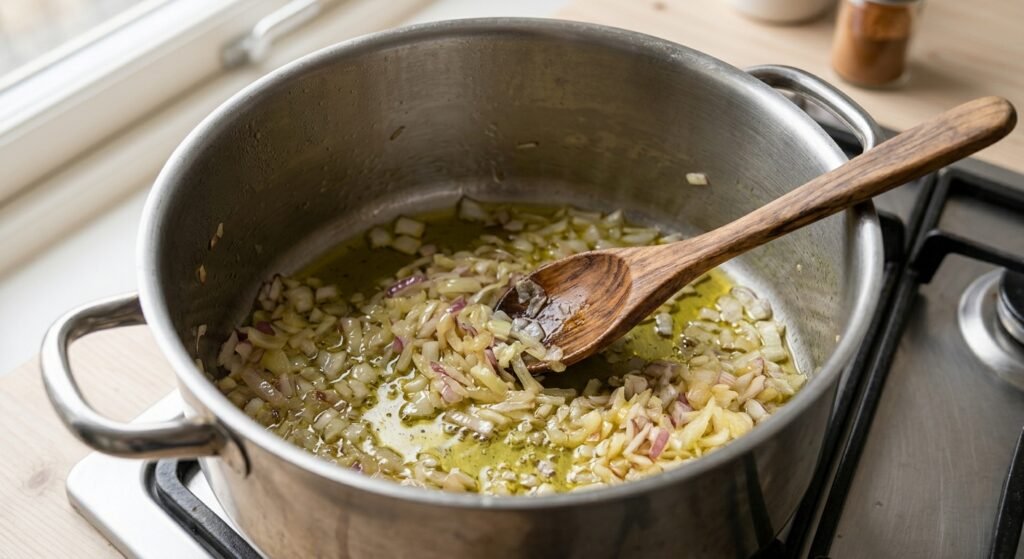
Soften the onion. Set a medium heavy-bottomed pot over medium heat and add the olive oil. When it shimmers, add the chopped onion and a pinch of the salt. Cook for about 5 minutes, stirring often, until the onion turns soft and translucent but has not browned. Browning changes the taste of the soup, and you want it sweet and clean here. If the onion starts catching on the bottom, lower the heat and add a splash of water.
Step 2: Carrot and potato added to the pot for Turkish lentil soup
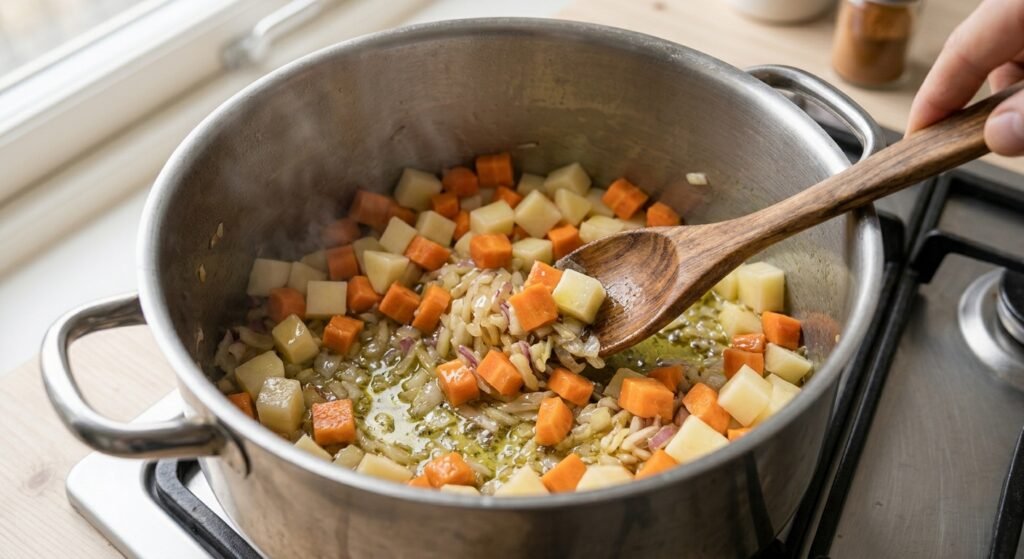
Add the carrot and potato. Stir in the diced carrot and potato and cook for 3 minutes, stirring now and then. You are not trying to brown them. You are giving them a head start and letting them take on the flavor of the onion and oil. The vegetables should glisten and smell faintly sweet. This short step is what separates a rich Turkish lentil soup recipe from a flat pot of boiled lentils.
Step 3: Tomato paste and spices blooming in oil for lentil soup
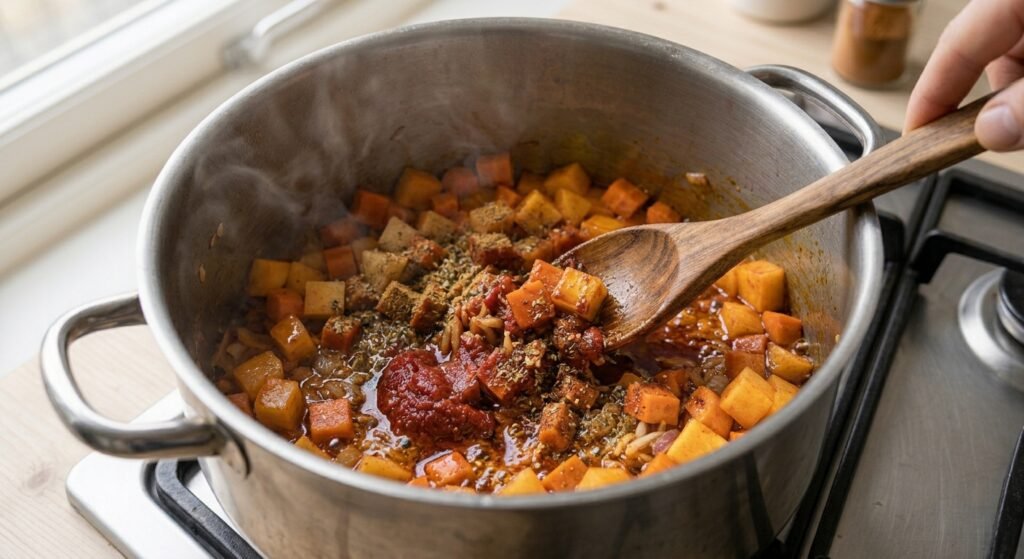
Bloom the garlic, pastes and spices. Add the garlic and cook for 30 seconds until fragrant. Push the vegetables to the side, drop the tomato paste and red pepper paste into the clear space, and fry for about a minute until the paste darkens a shade. Sprinkle in the cumin, paprika and black pepper and stir everything together for 20 seconds. Keep the heat at medium. Spices burn fast, and burnt paprika turns the whole soup bitter.
Step 4: Hot water poured over red lentils in the soup pot
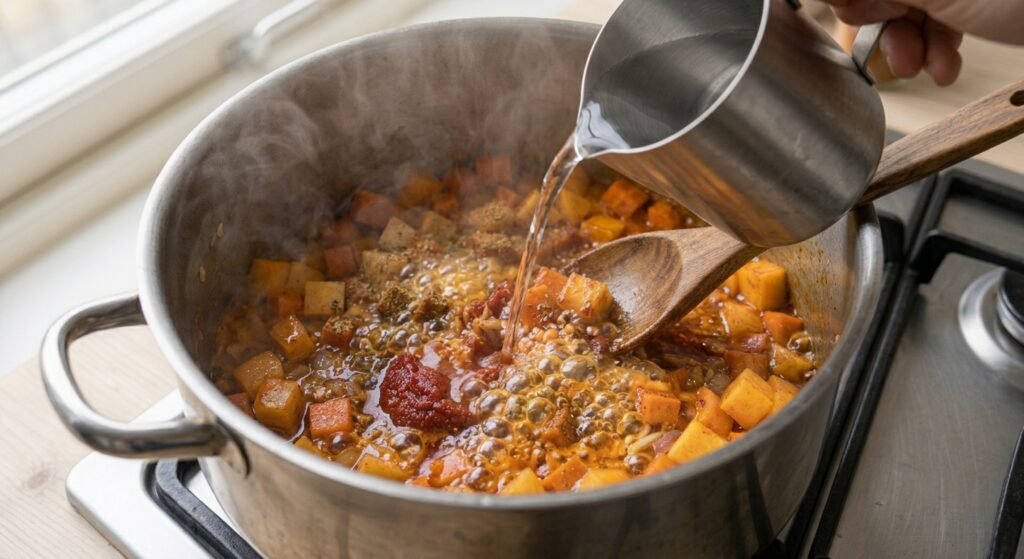
Add the lentils and water. Tip in the rinsed lentils and stir to coat them in the spiced oil for about 30 seconds. Pour in 6 cups of hot water or stock and scrape the bottom of the pot with a wooden spoon to lift any stuck bits. Add the rest of the salt. The liquid should sit about 4 cm (1.5 inches) above the lentils. If it looks lower, add a little more hot water now rather than later.
Step 5: Skimming foam from simmering Turkish red lentil soup
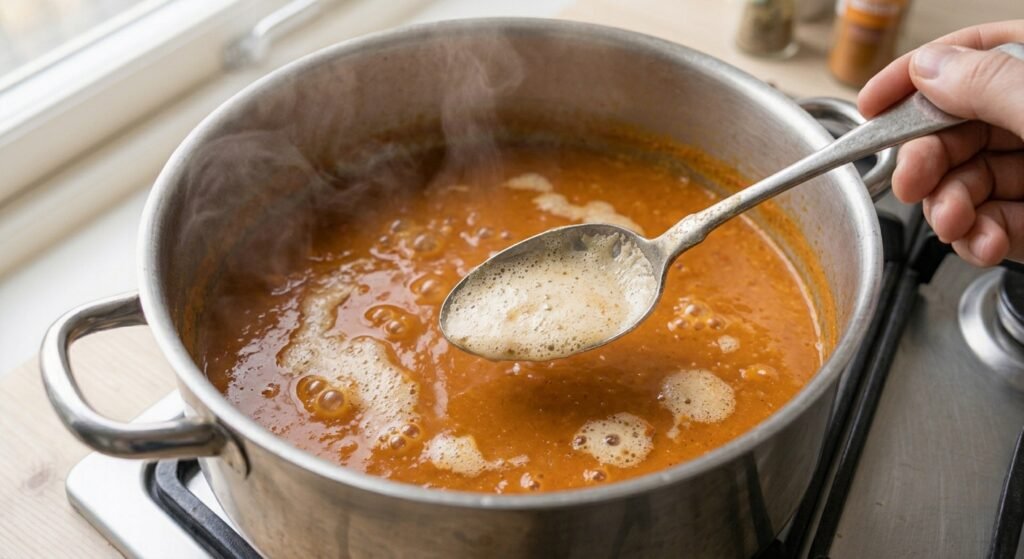
Boil and skim. Raise the heat to high and bring the pot to a boil. A pale foam will gather on the surface, so skim it off with a spoon. Skimming keeps your Turkish lentil soup recipe tasting clean and stops the pot from foaming over later. Once most of the foam is gone, reduce the heat to low, partly cover the pot and let it bubble gently. Do not cover it fully, or it may boil over.
Step 6: Red lentil soup simmering until soft and thick
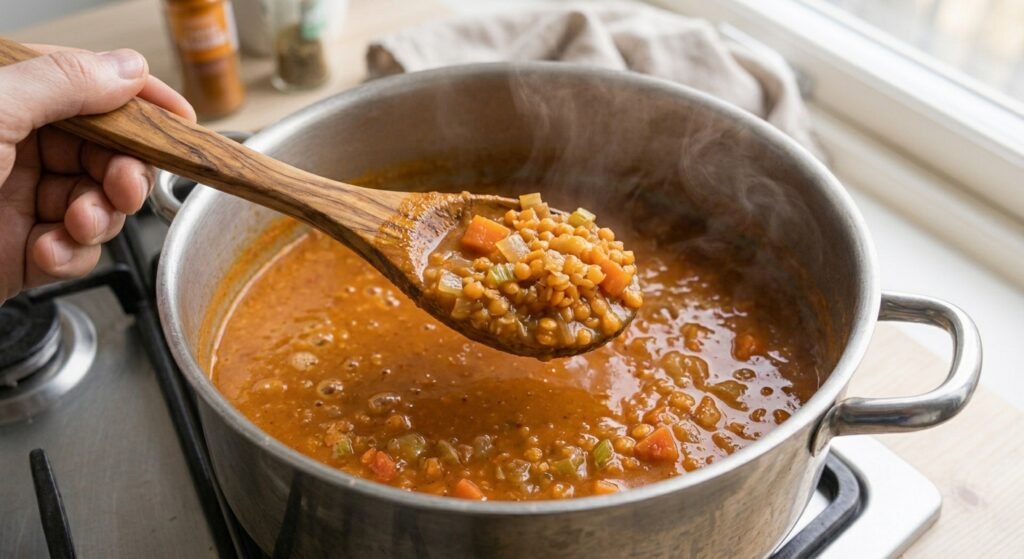
Simmer until the lentils collapse. Simmer for 18 to 22 minutes, stirring every 5 minutes so the lentils do not settle and scorch. The soup is ready when the lentils have broken down into a thick, soft mass and the carrot and potato crush easily against the side of the pot. If it thickens too fast, add half a cup of hot water. Lentils are thirsty, so a splash now and then is normal.
Step 7: Blending Turkish lentil soup recipe until silky smooth
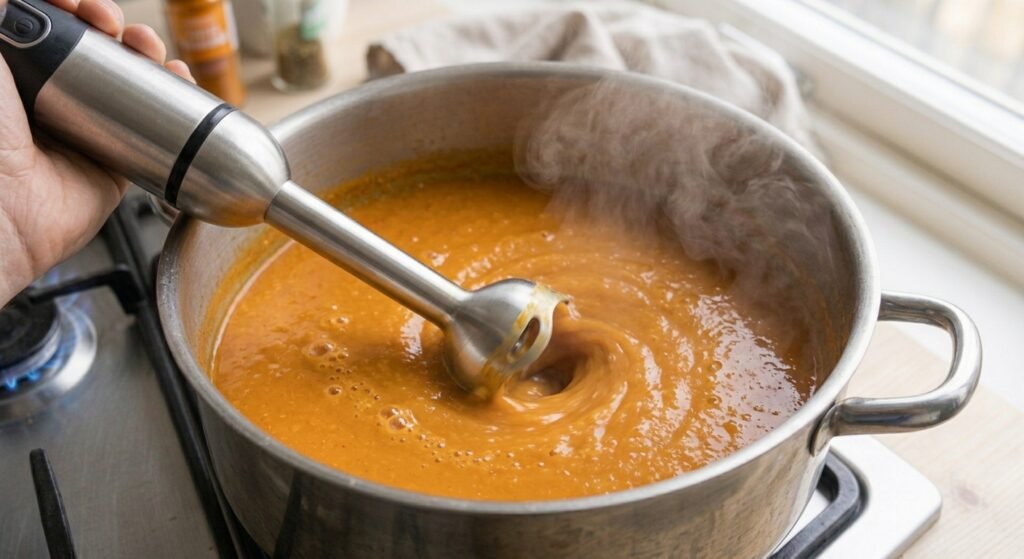
Blend until silky. Take the pot off the heat and let it rest for 2 minutes. Use an immersion blender and blend until smooth, moving it in slow circles to catch everything. With a countertop blender, work in two batches, fill it only halfway, and hold the lid down with a folded towel because hot soup expands. A mostly smooth Turkish lentil soup recipe should coat the back of a spoon without feeling heavy.
Step 8: Tasting and seasoning smooth red lentil soup
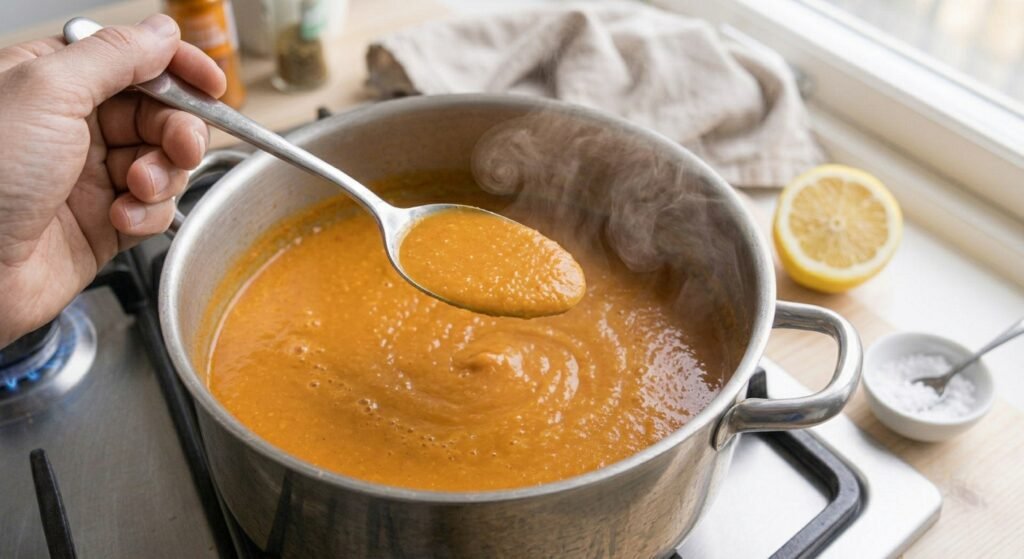
Adjust the texture and seasoning. Put the pot back on low heat. Taste, then add salt a pinch at a time. If the soup is too thick, stir in hot water a quarter cup at a time. If it is too thin, simmer it for a few more minutes with the lid off. You want a sauce-like pour that lightly coats the spoon. Too thin, it feels flat. Too thick, it eats like porridge. Stir in the lemon juice last.
Step 9: Paprika and mint butter sizzling in a small pan
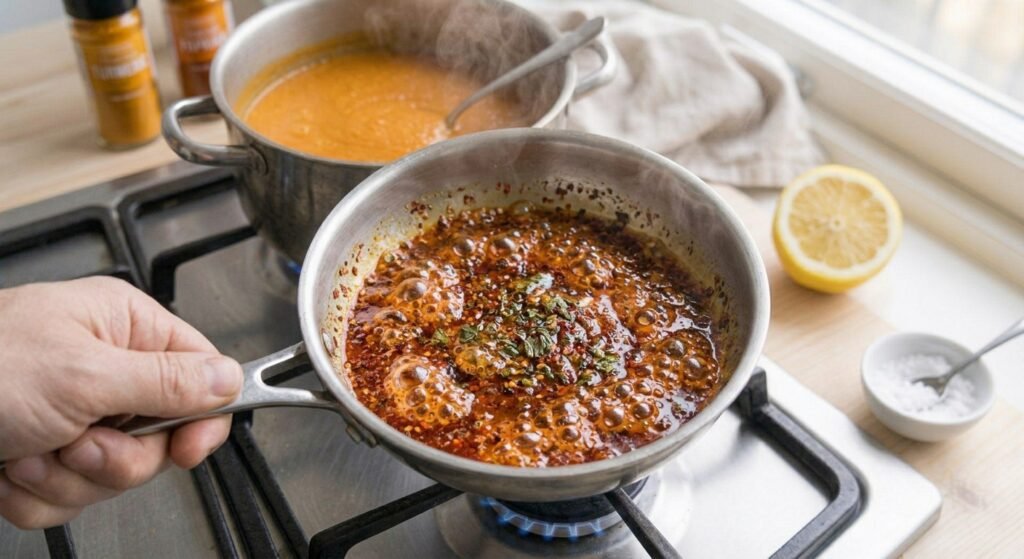
Make the paprika butter. Melt the butter in a small pan over medium heat. When it starts to foam, add the dried mint and Aleppo pepper. Swirl the pan for 20 to 30 seconds until the butter turns a deep red-orange and smells toasty. Pull it off the heat right away. Paprika and chili turn bitter fast, so do not walk away from this step, even for a moment.
Step 10: Finished Turkish lentil soup recipe with paprika butter drizzle
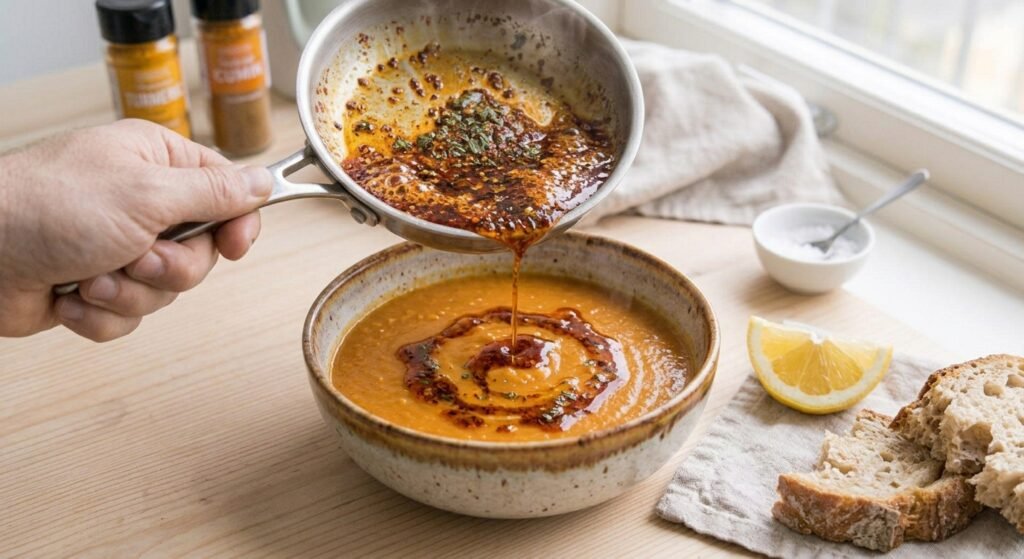
Serve it hot. Ladle the soup into warm bowls. Spoon the sizzling butter over the top and let it streak and pool across the surface. This is the moment your Turkish lentil soup recipe turns into the bowl you remember. Serve right away with lemon wedges, bread and a little chopped parsley if you like. Let each person add lemon to taste.
Tips for the Best Turkish Lentil Soup Recipe
Tips That Make a Difference
Use a heavy pot. Thin pots heat unevenly, and lentils love to stick to the bottom and scorch. A Dutch oven or a thick-based saucepan makes things easier.
Season in stages. A pinch with the onion, the rest with the water, and a final adjustment after blending. Soup concentrates as it cooks, so tasting at the end keeps you from over-salting.
Stir more than you think you need to. Lentils sink, and the bottom of the pot is where trouble starts. A quick stir every few minutes is enough.
Decide on your texture. For a restaurant-style soup, blend until fully smooth. For a homey one, blend about two thirds and leave a few whole lentils behind. Both are good. It is a matter of mood.
If you are cooking for guests, this Turkish lentil soup recipe can be made a day ahead up to the blending step. Reheat it gently and make the paprika butter just before serving.
Variations to Try
- Spicy version: double the red pepper paste and use a full teaspoon of Aleppo pepper in the butter.
- Vegan version: use olive oil instead of butter and water or vegetable stock. Fried mint in olive oil works just as well.
- Heartier version: add a quarter cup of fine bulgur or rice in the last 10 minutes of simmering, along with an extra cup of hot water.
- Sweet potato version: swap the white potato for sweet potato for a sweeter, deeper orange soup.
- Greens version: stir a handful of chopped spinach into the pot after blending and let it wilt for 2 minutes.
- Chicken stock version: use low-sodium chicken stock instead of water for a richer, rounder base.
- Crunchy version: fry small cubes of bread in butter until golden and scatter them on top.
Storage Tips
Let the soup cool at room temperature for no more than an hour or two, then move it to airtight containers. In the fridge it keeps well for up to 4 days. The flavor actually improves on day two, so it is a good make-ahead soup.
For the freezer, portion it into containers or freezer bags and leave a little room at the top for expansion. It freezes for up to 3 months. If you plan to freeze it, skip the paprika butter and make that fresh when you serve. Butter and mint taste best straight from the pan.
This Turkish lentil soup recipe thickens a lot as it sits, because lentils keep absorbing liquid. That is normal. A splash of water when you reheat brings it right back. Label the container with the date so you are not guessing later.
Reheating Tips
The stovetop is the best way to reheat. Pour the soup into a pot over low to medium heat, add a splash of water, and stir often until it is hot all the way through. Avoid a hard boil, which can make the soup spit and stick.
In the microwave, heat a bowl in 60-second bursts, stirring in between. Cover it loosely so it does not splatter. Add a spoonful of water if it looks stiff.
If the soup is frozen, thaw it overnight in the fridge first. In a hurry, you can warm it straight from frozen in a pot over low heat with a lid on and a few tablespoons of water, stirring as it loosens.
Once it is hot, taste it again. Cold storage dulls the lemon and the salt, so a fresh squeeze of lemon and a spoon of newly made paprika butter bring it back to life. Reheat only what you plan to eat, and avoid reheating the same portion more than once.
Common Mistake to Avoid
Browning the onion. Brown onions turn the soup nutty and dark. Keep it soft and pale for a clean, sweet base.
Skipping the rinse. Unrinsed lentils bring extra starch and more foam, and the soup can taste dusty.
Adding the lemon too early. Long cooking mutes the brightness. Add it at the end and again at the table.
Over-salting at the start. The soup reduces, and the flavors concentrate. Season lightly early on and finish at the end.
Filling the blender to the top. Hot soup expands. Fill it halfway and hold the lid firmly, or use an immersion blender.
Using green or brown lentils. They will not break down the same way, and the soup will turn out gritty instead of silky.
Burning the paprika butter. It takes seconds. Pull the pan off the heat as soon as the butter turns deep red and smells toasty.
Conclusion
This chicken karahi recipe proves that good food does not need a long ingredient list. It needs good tomatoes, honest heat and a little patience while the masala fries.
Once you have made it a couple of times, you will start to read the pan. You will know by the sound, the smell and the shine of the oil when it is ready.
Try it this weekend, serve it hot with naan, and let me know how it turned out in the comments.