Chicken Karahi Recipe – Easy & Delicious In 2026
Introduction
There are dishes you cook, and then there are dishes you crave. This chicken karahi recipe sits firmly in the second group.
Karahi is Pakistani home cooking at its most honest. A hot pan, a handful of ingredients, a lot of tomato, and no hiding behind heavy sauces or long spice lists. What you get is chicken that tastes like chicken, with a thick, glossy masala that clings to every piece.
This version is built for home kitchens. You do not need a charcoal fire or a special pan. A heavy wok or a deep skillet will do the job, and the whole thing is on the table in under an hour.
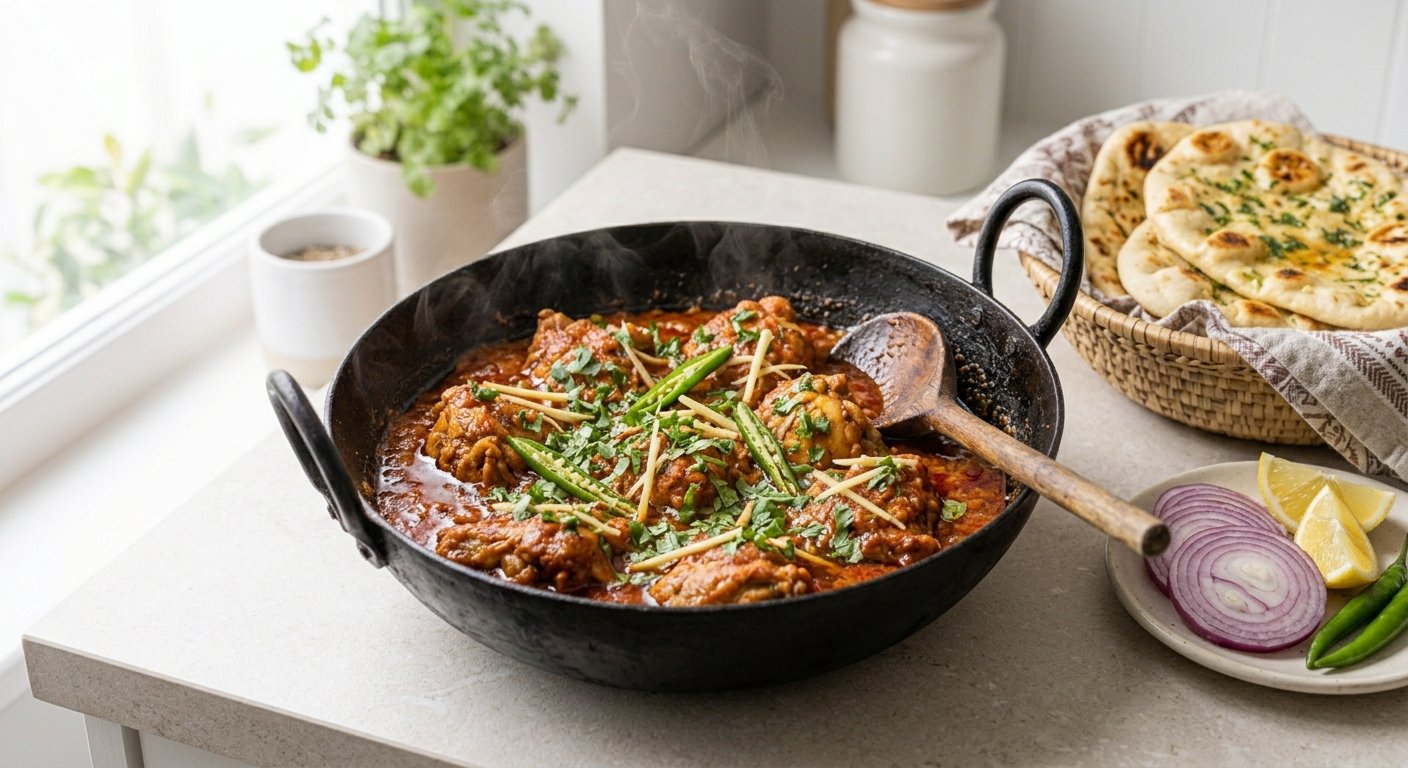
chicken karahi recipe
Ingredients
Method
- Bone-in chicken is worth it. The bones give the masala body and a deeper flavor. Boneless chicken cooks faster and is fine in a hurry, but the sauce will taste thinner. If you want the best of both, use mostly bone-in pieces and a few boneless thighs.

- Tomatoes decide the dish. Choose ripe, red, juicy ones. Pale, hard tomatoes make a sour karahi that no amount of salt can fix. If your tomatoes taste dull, add a small spoon of tomato paste and balance with a pinch of sugar. Fresh tomatoes are better than canned here, since you want the pieces to melt down and fry in oil.
- Oil quantity is not a mistake. Karahi is traditionally cooked with generous oil, and that oil rising to the top is how you know it is done. You can cut it down a little, but not by half. Too little oil and the masala will not fry properly.
- Crush your own spices. A mortar and pestle gives you coarse coriander and cumin, which taste fresher than the pre-ground version. If you do not have one, put the seeds in a zip bag and roll over them with a rolling pin.
- Yogurt is optional but helpful. It adds a gentle tang and helps the sauce come together. Lahori style often uses it, Peshawari style often does not. Use it if you like a slightly softer sauce.

- You want a masala that clings to the chicken, not one that floods the plate. Too watery, it tastes flat and boiled. Too dry, it feels harsh and the spices catch in your throat.
- The sign you are looking for is oil. When the oil rises and sits in a clear, reddish layer around the edge of the masala, the tomatoes are properly cooked. If you do not see oil, keep going for a few more minutes.
- Taste matters as much as appearance. Karahi should lean savory and tangy, with a clear bite from the ginger and pepper. If it tastes sour, the tomatoes are not cooked enough or need a pinch of sugar. If it tastes flat, it probably needs salt or a squeeze of lemon.
- One more thing about heat. Karahi is a high-heat dish. Do not be shy with the flame during the frying stages. Medium heat gives you a stewed chicken, while high heat gives you karahi.
- Karahi is both the name of the pan and the name of the dish. The pan is a deep, round-bottomed wok, traditionally made of iron or steel, and the shape is the secret. It pushes heat to the center, so the tomatoes break down fast and the oil rises to the top.
- Unlike many curries, karahi does not rely on onions to build the sauce. Tomatoes do most of the work. Ginger, garlic and green chilies bring the punch, and a few coarsely crushed spices finish the job. Black pepper and crushed coriander give it a fresh, almost sharp aroma that is easy to recognize once you have smelled it.
- There are two well-known styles. Lahori karahi is spicier, lean on ingredients and heavy on ginger and green chili. Peshawari karahi is even simpler, often with just chicken, tomato, salt and oil. The recipe here sits somewhere in the middle, with enough spice to taste interesting and enough restraint to keep it clean.
- Hot tandoori naan or fresh roti
- Plain paratha for a heartier meal
- Sliced onion, green chili and lemon wedges on the side
- A cool bowl of raita or a simple cucumber salad
- Kashmiri chai or a glass of lassi afterwards

- Add the fresh ginger and green chilies at the very end, not at the start. They stay bright and sharp, and that sharpness is what makes karahi taste like karahi.
Step 1: Prepare the chicken for chicken karahi recipe.
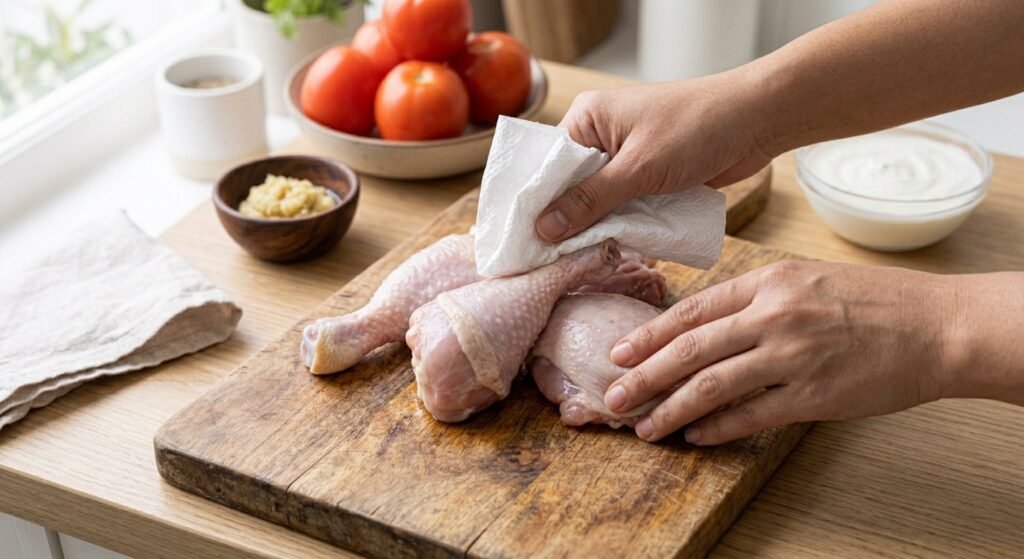
Wash the chicken pieces and pat them completely dry with a paper towel. This matters more than it sounds. Wet chicken steams in the pan and never gets that light golden color. Keep the pieces medium in size, around 2 inches, so they cook evenly.
Step 2: Crush the spices and prep the tomatoes.
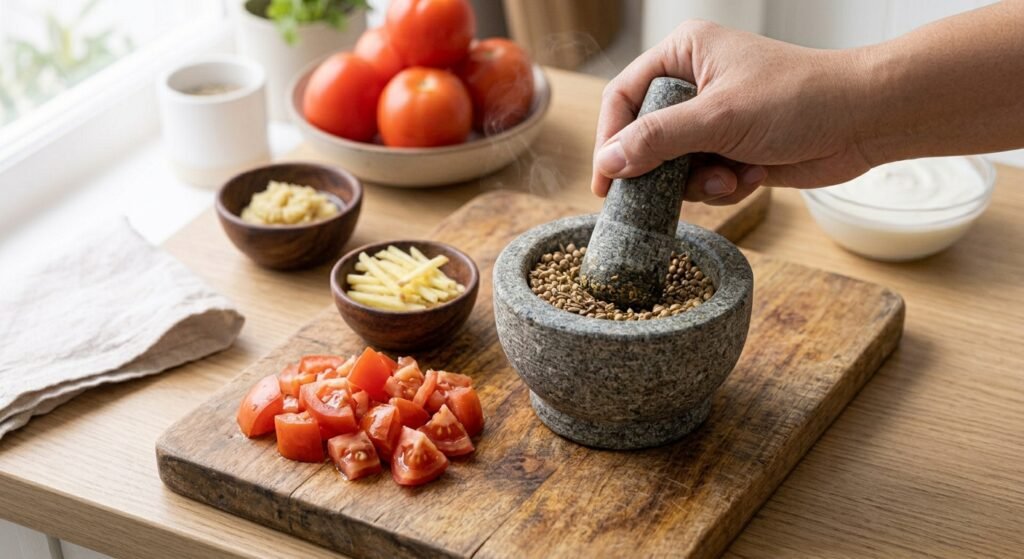
Lightly crush the coriander and cumin seeds in a mortar until coarse, not powdery. Chop the tomatoes roughly. There is no need to peel them, since the skins break down as they cook. Slit the green chilies and cut the ginger into thin matchsticks.
Step 3: Heat the oil.
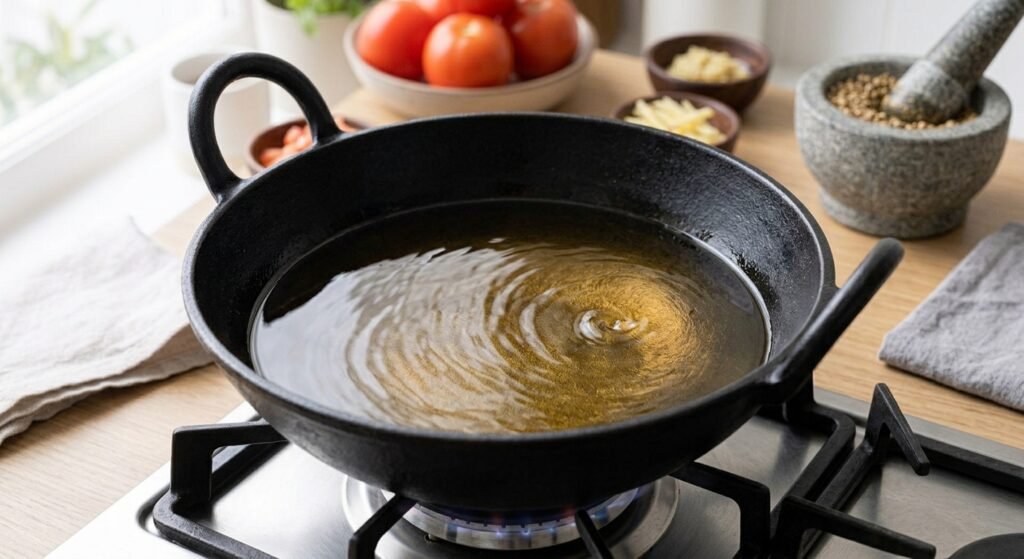
Place a karahi or heavy wok over medium-high heat. Add the oil and let it heat until it shimmers. You want it hot, but not smoking. A small test is to drop in a piece of ginger. If it sizzles right away, you are ready.
Step 4: Fry the ginger garlic paste.
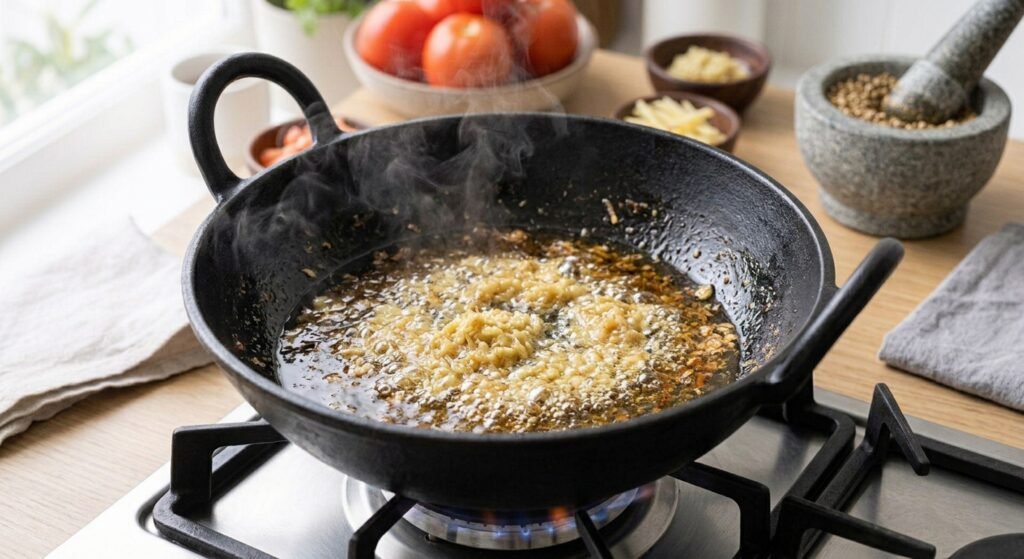
Add the ginger garlic paste for chicken karahi recipe then fry for about 30 seconds, stirring constantly, until the raw smell fades. Do not let it brown. Browned garlic tastes bitter, and it will follow you into the final dish.
Step 5: Sear the chicken.

Add the chicken pieces and spread them in a single layer. Cook on high heat for 6 to 8 minutes, turning occasionally, until the chicken turns white and begins to pick up a little color on the edges. This is the first big flavor step in any good chicken karahi recipe, so do not rush it.
Step 6: Add the tomatoes and salt.
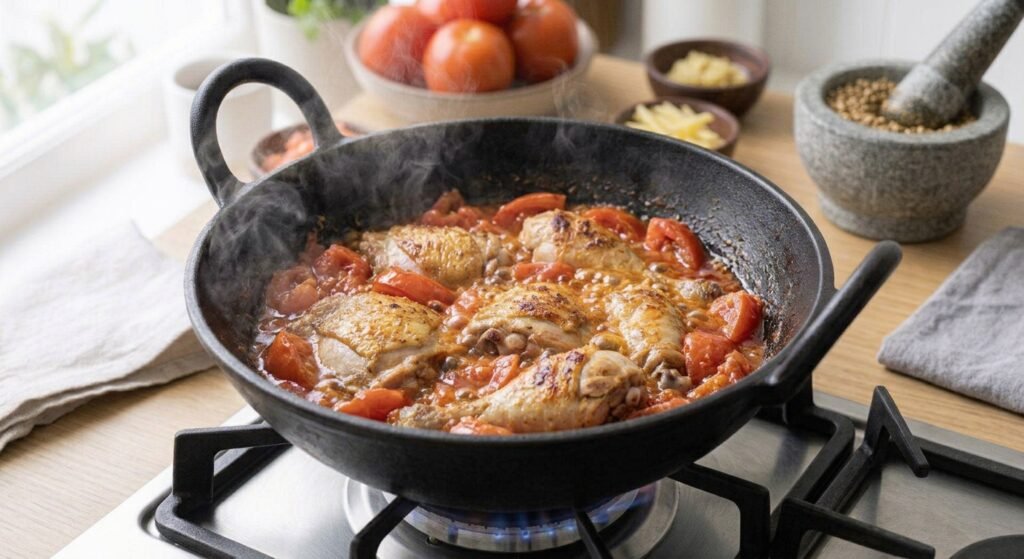
Add the chopped tomatoes, salt and red chili powder. Stir well. Cover the karahi with a lid and cook on medium heat for 10 to 12 minutes, stirring once or twice, until the tomatoes are completely soft and have released their juice.
Step 7: Mash and fry the masala.

Remove the lid. Using the back of your spoon, press down on the tomatoes and break them into a thick paste. Raise the heat to high and cook for 8 to 10 minutes, stirring often, until the water evaporates and the oil starts to separate at the sides. This stage is where your chicken karahi recipe gets its deep, rich masala, so watch the pan closely and scrape the bottom as you go.
Step 8: Add the yogurt and spices.
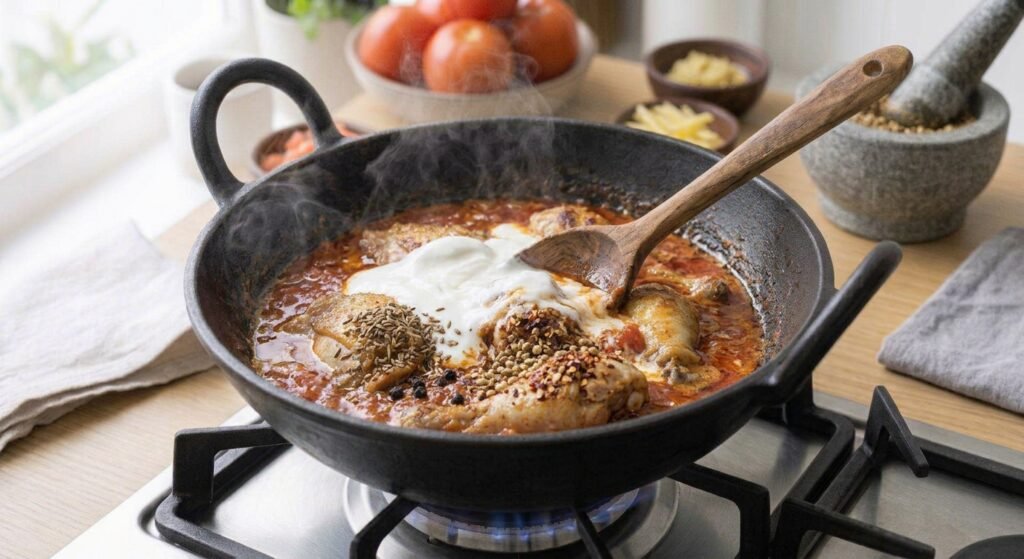
Lower the heat slightly. Add the whisked yogurt, crushed coriander, crushed cumin and black pepper. Stir quickly so the yogurt does not curdle. Cook for another 5 to 6 minutes until the yogurt blends in and the masala turns thick and glossy again.
Step 9: Check the chicken.

Poke a piece with a knife near the bone. The juices should run clear and the meat should feel tender. If the chicken needs more time, sprinkle a few spoonfuls of hot water and cover for 5 minutes. Karahi should end up as a thick, nearly dry masala, not a runny gravy.
Step 10: Finish with ginger, chilies and garam masala.

Turn the heat to medium-high. Add the green chilies, most of the ginger matchsticks and the garam masala. Stir for 2 minutes so the aroma opens up. Squeeze in the lemon juice and turn off the heat.
Step 11: Garnish and serve.

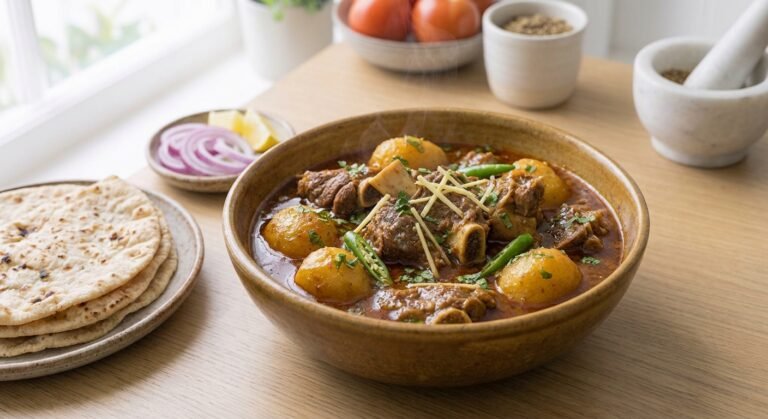
Scatter fresh cilantro and the remaining ginger over the top. Let the karahi rest for 3 to 5 minutes, then bring it straight to the table with hot naan, onion rings and lemon wedges. A good chicken karahi recipe is best served right away while the oil still shimmers.
Tips and Variations
- Use fresh, ripe tomatoes. This is the biggest factor in how the dish tastes.
- Do not add water at the start. The tomatoes and chicken release plenty of their own liquid.
- Cook in a heavy pan. A thin pan burns the masala before the chicken is ready.
- For a milder karahi, cut the red chili powder to half and use fewer green chilies.
- For a spicier version, add extra green chilies and a teaspoon of crushed red pepper flakes.
- For a Peshawari style, skip the yogurt, the ginger matchsticks and most of the spices. Use only chicken, tomato, salt, oil and a few green chilies.
- For a white karahi, replace tomatoes with cream, yogurt and black pepper, and cook the chicken in ghee. It tastes completely different, rich and mild.
- For a quicker dinner, use boneless chicken thighs and reduce the cooking time to about 25 minutes.
- For a mutton karahi, pressure cook the meat first until tender and then follow the same steps.
Storage Tips
Let the karahi cool to room temperature, about an hour at most, and then move it into an airtight container. Keep it in the fridge for up to 3 days.
For longer storage, freeze it in portions for up to 2 months. Leave a small gap at the top of the container. When you thaw it, let it sit in the fridge overnight rather than on the counter.
The flavor is often even better the next day. The spices settle in, and the masala gets a little deeper.
Reheating Tips
Reheat gently and add a little moisture. Karahi is thick, so it can catch on the pan.
- Stovetop: Warm in a pan over low heat with two or three spoonfuls of water. Stir often until hot all the way through. This keeps the masala glossy.
- Microwave: Heat in 60 second bursts, stirring between each, and sprinkle a spoon of water if it looks dry.
- From frozen: Thaw overnight, then reheat on the stove with a little oil.
A squeeze of lemon and a few fresh ginger slivers at the end bring the flavor back to life.
Common Mistake to Avoid
The most common mistake is not frying the masala long enough. Many cooks add the spices, see the sauce looking thick, and stop. But if the oil has not separated, the tomatoes are still raw inside, and the dish will taste sour.
Give it the extra five minutes. Stir, scrape and wait for the oil to come up.
The second mistake is crowding the pan. A karahi with too much chicken traps steam and makes the meat pale and watery. If you are cooking for a big group, cook in two batches or use a larger pan.
Final Thoughts
This chicken karahi recipe proves that good food does not need a long ingredient list. It needs good tomatoes, honest heat and a little patience while the masala fries.
Once you have made it a couple of times, you will start to read the pan. You will know by the sound, the smell and the shine of the oil when it is ready.
Try it this weekend, serve it hot with naan, and let me know how it turned out in the comments.