Ingredients
Method
Ingredient Notes: Why Each One Matters
- Moong and masoor daal together. Moong daal is light and holds a little texture. Masoor melts into a creamy body within minutes. Using both gives you a daal that is smooth but not pasty. If you only have one, moong alone is milder and masoor alone is thicker and quicker.
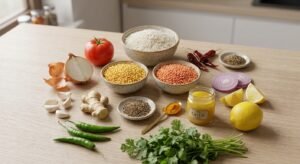
- Turmeric. Just a half teaspoon. It gives the golden color and a mild earthy note. More than that and the daal starts to taste like medicine.
- Tomato and onion in the pot. These cook down with the lentils and give the base a soft sweetness and a little acidity. Fresh tomato is better than canned here, because canned tomato can turn the daal sour once it is simmered for a while.
- Ginger and green chilies. The ginger keeps the daal light on the stomach, and the chilies give a quiet heat. Slit them instead of chopping if you want flavor without too much spice.
- Ghee or oil. Ghee gives a nutty, rounded finish and is my pick for a proper daal chawal recipe. Oil works well too, and it is the better choice if you want a lighter or dairy-free meal.
- Cumin and garlic. These two carry the tarka. Cumin should crackle and darken slightly. Garlic should turn golden, not brown. Brown garlic tastes bitter.
- Kashmiri red chili powder. It adds a deep red color without too much heat. Regular chili powder works, but start with a quarter teaspoon.
- Basmati rice. Long, slender grains that stay separate and smell lovely as they cook. Aged basmati is best. Ordinary long grain rice also works, but it tends to clump.
Preparation: Getting Everything Ready
- This is a quick dish, but it moves fast once the pot is on. Spending ten minutes on prep means the cooking part feels calm.
Rinse and Soak the Daal
- Put both daals in a bowl and cover with cold water. Rub them between your palms and drain. Repeat until the water runs almost clear, usually three or four rinses. Then cover with fresh water and let it sit for 20 minutes. Soaking is optional. If you are in a hurry, skip it and just add 10 minutes to the cooking time. If you have the time, do it. Soaked lentils cook evenly and turn creamier.
Wash the Rice Gently
- Place the basmati in a large bowl and fill with cold water. Swirl it with your fingers, pour off the cloudy water and repeat until it runs mostly clear. Be gentle. Basmati grains are long and delicate, and rough handling snaps them. Soak the rice for 20 minutes while the daal soaks, then drain well.
Chop the Aromatics
- Chop the tomato and the small onion for the pot into rough pieces. They will dissolve, so neatness does not matter. For the tarka, slice the larger onion thin and the garlic thin too. Thin slices fry evenly and go crisp. Thick garlic slices stay soft in the middle.
Measure the Water Properly
- Rice does best with a measured amount of water. For soaked basmati, 1 1/2 times the volume of rice is a good starting point. Daal is more forgiving. Start with 4 cups and keep a kettle of hot water nearby. Lentils drink more water as they sit, so you will almost always need a splash later.
Set Up the Tarka Station
- Place the ghee, cumin, dried chilies, red chili powder and garam masala next to the stove in small bowls. The tarka takes about three minutes, and spices burn in seconds. You do not want to be hunting for a spoon while the garlic is browning.
Use the Right Pot
- A medium, heavy-bottomed pot works best for the daal. Thin pots scorch at the bottom and let steam escape too fast. For the rice, a pot with a tight-fitting lid is a must. If your lid is loose, put a clean kitchen towel under it to hold the steam in.
Serving Suggestions and Quick Tip
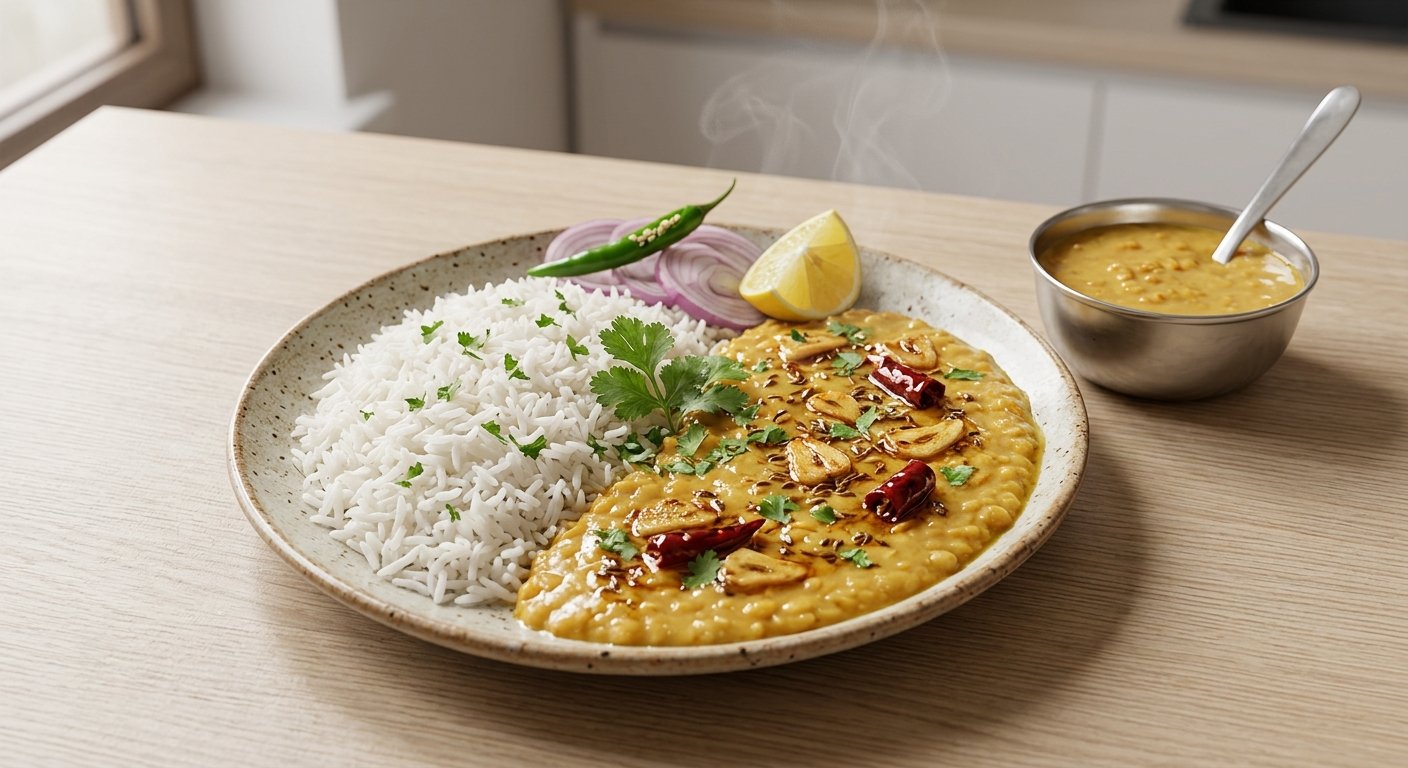
- Serve the rice and daal together on one plate, with a little daal poured over the rice and extra daal in a small bowl on the side. Squeeze lemon over the top. Add sliced raw onion, a green chili and a spoon of pickle for crunch and sourness. A simple bowl of yogurt or cucumber raita cools the plate nicely. Some families also like a fried egg, a seekh kebab or a plate of crispy fried okra alongside. If you are serving a full desi dinner, this daal chawal recipe pairs well with a dry vegetable like aloo gobi or a quick bhindi fry. For a lighter meal, serve the daal with brown rice or with a roti instead. Both are good. White basmati is still the classic.

Quick Tip:
- Pour the hot tarka over the daal at the table, just before serving. The sizzle makes it taste fresher, and the garlic and cumin stay crisp instead of going soggy in the pot.