Ingredients
Method
Ingredient Notes: Why Each One Matters
- Large shrimp. Look for shrimp labeled 21 to 25 per pound, or similar. Larger shrimp are harder to overcook and have a meatier bite. Small shrimp turn rubbery in seconds. Fresh or frozen both work, and frozen is often the better choice, because many shrimp sold as fresh were frozen and thawed before they reached the counter.
- Peeled and deveined. This saves time at the table and in the pan. If you buy shell-on shrimp, peel them and use the shells for a quick stock if you like. Run a small knife along the back to remove the dark vein.
- Linguine or spaghetti. Long, thin pasta carries a light sauce well. Linguine is slightly flatter and holds more sauce, so it has a small edge. Angel hair cooks too fast and can clump, and short pasta shapes work in a pinch.
- Butter. The butter makes the sauce silky and carries the garlic flavor. Unsalted gives you control over the salt, because the Parmesan and the pasta water already bring plenty.
- Garlic. Six cloves may sound like a lot, but they mellow in the butter. Fresh is essential. Jarred garlic tastes sharp and slightly sour. Slice or mince it, but keep the heat gentle, because burnt garlic turns bitter and cannot be saved.
- Stock and lemon juice. The liquid lifts the browned bits from the pan and builds the base of the sauce. Lemon adds the brightness that makes the dish taste fresh instead of heavy. If you prefer, dry white wine can replace the stock, but this version needs none.
- Red pepper flakes. A gentle warmth that sits in the background. Add more if you like heat, or leave them out for a milder dish.
- Pasta water. The starch in it binds the sauce to the pasta. It is free, and it makes the difference between a sauce that slides off and one that clings. Always save a cup before draining.
- Parmesan. It adds a salty, nutty depth. Grate it fresh, because pre-shredded cheese is coated with powder that stops it melting smoothly.
- Parsley. It adds color and a clean, green flavor. Flat-leaf parsley has more taste than curly.
Preparation: Getting Everything Ready
- shrimp pasta moves quickly. The shrimp take only a few minutes, and the sauce comes together right after. Spending ten minutes on prep makes the cooking calm and keeps everything from overcooking.
Thaw and Dry the Shrimp
- If your shrimp are frozen, thaw them in a bowl of cold water for 10 to 15 minutes, or overnight in the fridge. Drain them well and pat them completely dry with paper towels. Wet shrimp steam instead of searing, and they release water that thins the sauce. This single step makes the most visible difference to the result.
Season the Shrimp Lightly
- Toss the dried shrimp with the salt, pepper, paprika and garlic powder in a bowl. Keep the seasoning simple, because the sauce brings plenty of flavor. Let them sit while you get the rest ready, but not for more than 15 minutes. Salt draws out moisture, and long sitting makes the shrimp watery.
Slice and Mince the Garlic
- Peel the garlic and slice it thin, or mince it if you want the flavor to spread more evenly through the sauce. Thin slices give a mellow, sweet taste and look pretty. Minced garlic is sharper. Either way, cut it just before cooking and keep it in a small bowl near the stove.
Zest Before You Juice
- Grate the lemon zest first, then cut the lemon and squeeze the juice. Zest is far easier to grate from a whole lemon. Measure out the juice and keep both in separate small bowls. The zest goes in at the end for fresh fragrance.
Grate the Cheese and Chop the Herbs
- Grate the Parmesan on the fine side of a grater so it melts quickly. Chop the parsley roughly. Keep both ready at the stove, because they go in at the very end, when there is no time to stop and chop.
Pick the Right Pan
- A large, wide skillet, about 30 cm (12 inches), gives the shrimp room to sear and the pasta room to toss. A crowded pan steams shrimp instead of browning them. Heavy stainless steel or cast iron holds heat well. Avoid very thin pans, which scorch the garlic.
Serving Suggestions and Quick Tip
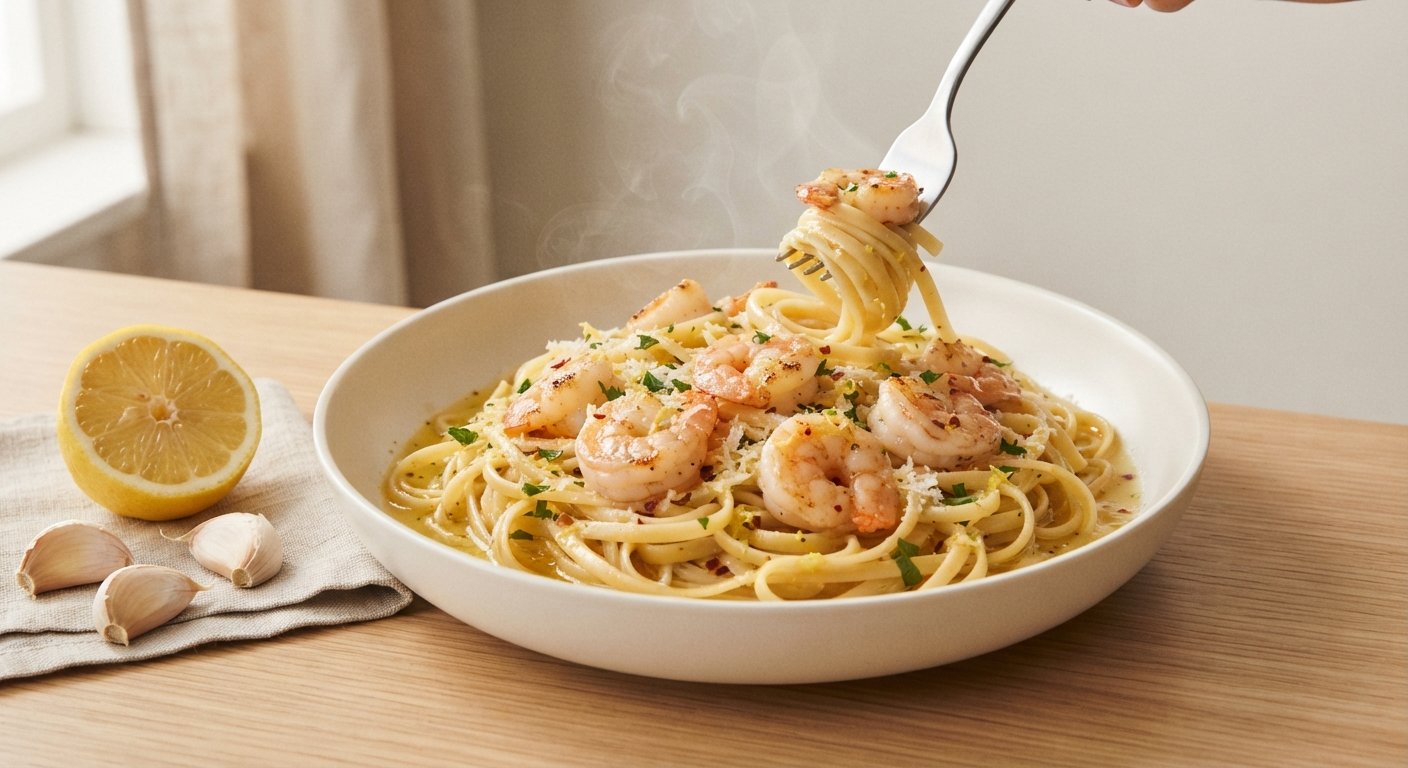
- Serve the pasta straight from the pan into warm, wide bowls. Twirl it with tongs to make neat nests, and arrange the shrimp on top. Finish with extra Parmesan, a pinch of parsley and a lemon wedge.
- This garlic butter shrimp pasta recipe is rich, so a simple side works best. A crisp green salad with a lemony dressing, roasted asparagus or steamed broccoli keeps the plate light. Warm garlic bread is a classic partner, and it is useful for mopping up any sauce left in the bowl.
- For a larger spread, serve it next to a Caesar salad or a bowl of tomato soup. For a lighter meal, use less pasta and add extra vegetables such as spinach or zucchini ribbons to the pan.
Quick Tip:
- Serve it right away on warm plates. Shrimp pasta keeps cooking in its own heat, and the sauce tightens as it cools. If it thickens on the table, a splash of hot pasta water loosens it again.