Ingredients
Method
Quick tip
- Some people soak the rice for 20 minutes before cooking. I used to do that, but honestly? I've stopped. It cooks perfectly fine without soaking, and I'm all about saving time when I can.

Preparation
- First things first—rinse that rice. I put it in a bowl and run water through it a couple of times until the water runs mostly clear. This gets rid of excess starch, which can make your kheer gummy instead of creamy.

- Crush your cardamom pods lightly. I just press them with the back of a spoon or the flat side of a knife. You want them to open up and release their oils, but you don't need to pulverize them.
- Soak those saffron strands in warm milk. This step is small but important because it brings out the color and flavor. If you skip it, the saffron won't do much.
- Chop your nuts if you haven't already. I like my almonds slivered and pistachios roughly chopped, but you do you.
Serving Suggestions
- Kheer is one of those desserts that works both warm and cold. Honestly, I love it either way.
- If you're serving it warm, ladle it into bowls right away and top with the remaining nuts. It's comforting and feels like the perfect ending to a meal.
- But here's the thing—kheer tastes even better the next day when it's chilled. The flavors meld together, and the texture becomes denser and creamier. I often make it a day ahead if I'm having guests over.
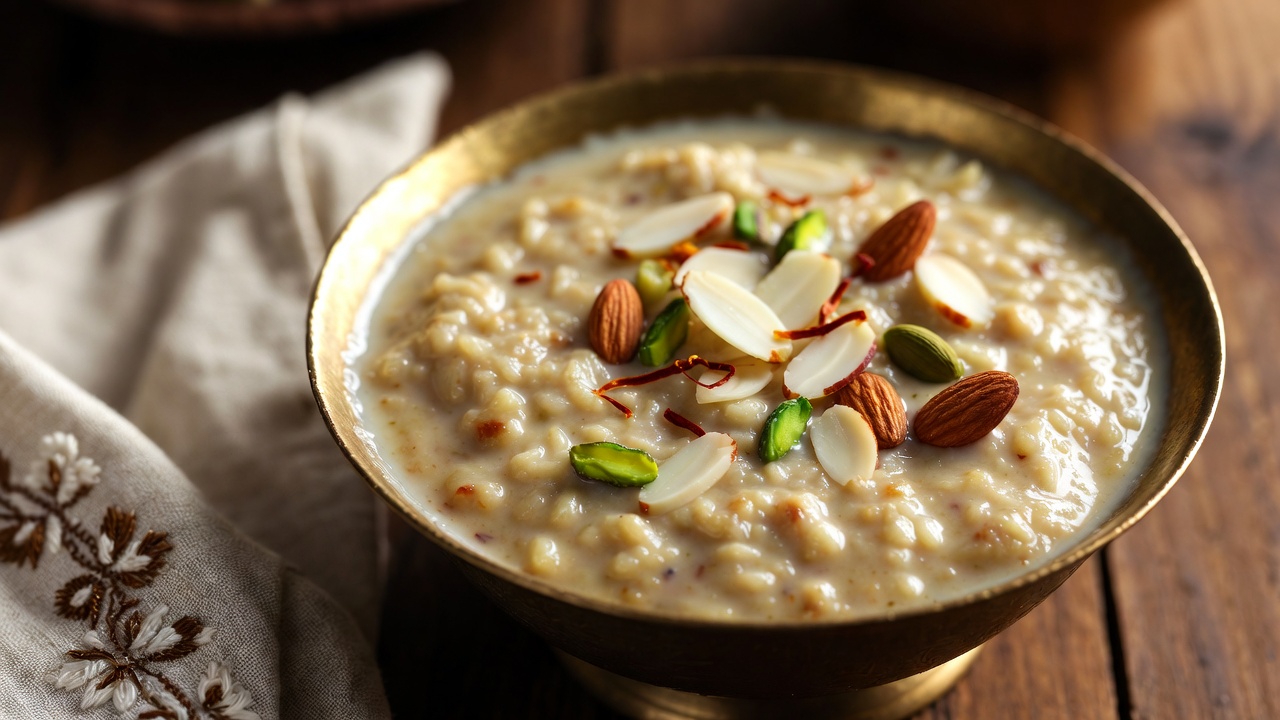
- You can serve it in traditional brass bowls for that authentic touch, or just use whatever pretty bowls you have. Garnish generously with almonds, pistachios, and a few extra saffron strands if you're feeling fancy.
- Some people like to add a thin layer of edible silver leaf (vark) on top for special occasions. Totally optional, but it does look stunning.