Healthy Beef Curry Recipe | Tender & Easy 2026
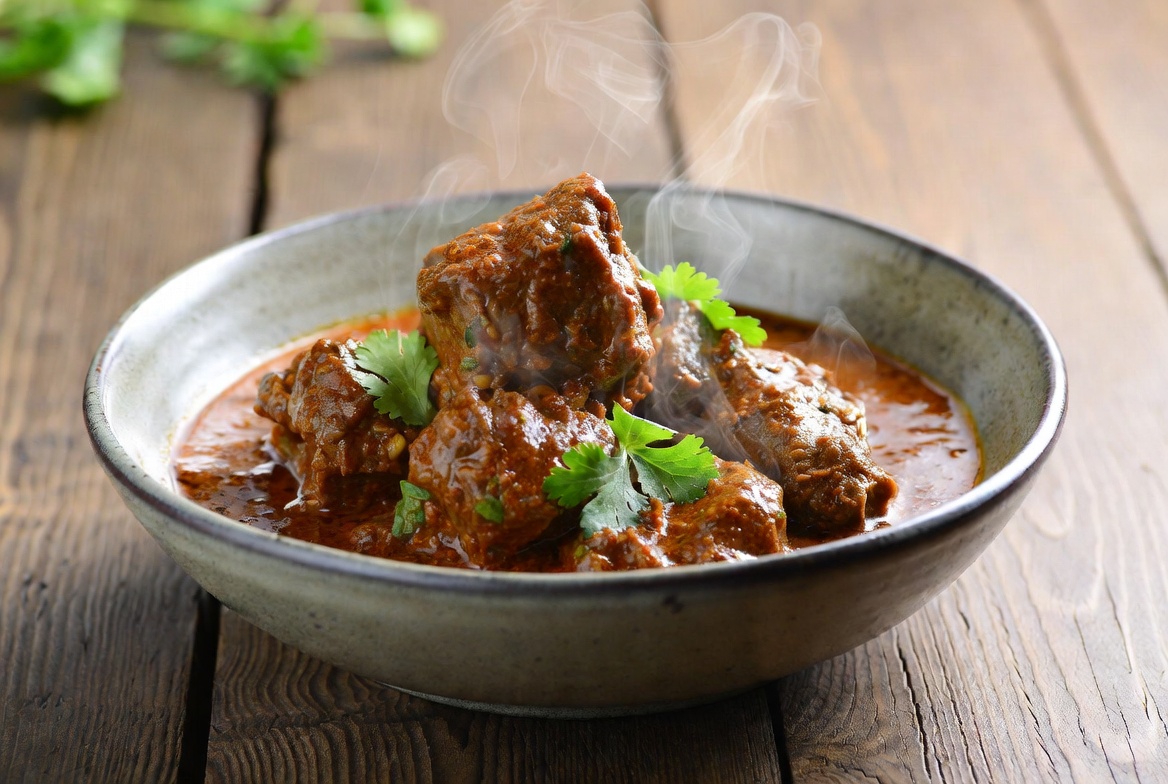
Healthy Beef Curry Recipe. I’ll be honest—when I first tried making beef curry with less oil, I had my doubts. Would it actually taste like curry, or just feel like a compromise? Turns out, it surprised me in a really good way. You don’t have to soak everything in oil to get that deep, rich flavor people expect.
This lighter version has quietly become my go-to whenever I want curry that hits the comfort zone but doesn’t leave me feeling like a brick afterward. The beef turns out tender, the gravy thick and rich, and nobody ever guesses it’s way less oily than usual. I’ve made it for friends who usually stick to the traditional heavy version—they didn’t notice a thing.
The best part? You’re not giving anything up. The spices do most of the work, and a few simple tricks keep everything juicy and flavorful without that greasy layer floating on top. If you’re curious about slimming down your curry without losing the taste, this one’s worth trying.
Healthy Beef Curry Recipe with Less Oil
Ingredients
Method
- Start by cutting the beef into even cubes—around 1½ inches is a good size. Go smaller and they’ll dry out before they’re tender. Pat the pieces dry with a paper towel. It sounds fussy, but it matters. Wet meat won’t brown properly, especially when you’re cooking with less oil.Finely chop the onions. And yes, really finely. In this recipe, they’re meant to melt into the gravy and give it body, so this is worth the extra minute. Puree the tomatoes or chop them as fine as you can. If you have time, make your ginger-garlic paste fresh, but the store-bought version works just fine.Before you turn on the heat, measure out all your spices and keep them close. Once things get going, it happens fast, and you don’t want to be hunting for coriander powder while the onions are already on the edge of burning. Ask me how I know.


- Use a heavy-bottomed pot. Seriously, this makes a huge difference when you're cooking with less oil. It distributes heat evenly and prevents burning.Don't rush the onions. Golden brown onions are the backbone of this curry. If you add the tomatoes too early, they'll never caramelize properly.Marinate if you have time. I sometimes marinate the beef in yogurt, ginger-garlic paste, and a pinch of salt for 30 minutes before cooking. It's not essential, but it does make the meat extra tender.Adjust the water amount. If you like thicker gravy, use less water. For a soupier curry, add more. There's no right or wrong here—it's about what you prefer.Try different cuts of beef. I've made this with boneless beef ribs and it was incredible. Just adjust the cooking time based on the cut you use.Add vegetables. Sometimes I throw in potatoes, carrots, or peas about 15 minutes before the curry is done. It stretches the meal and adds nutrition.Make it spicier. If you want more heat, add an extra green chili or bump up the red chili powder. Taste as you go.Coconut milk variation. For a slightly different flavor profile, replace half the water with light coconut milk. It's not traditional, but it's delicious.
Video
Step 1
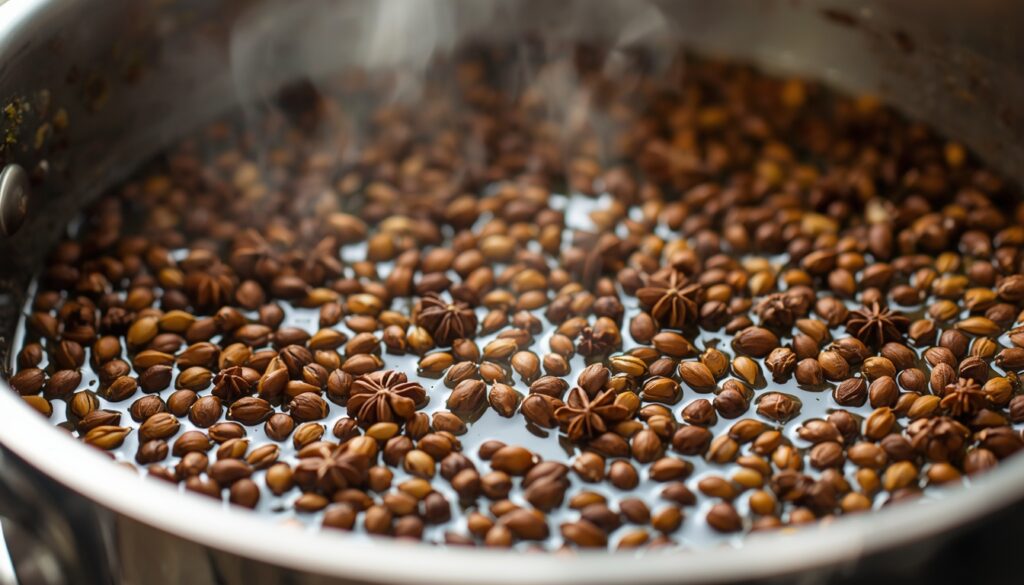
Heat the oil in a heavy-bottomed pot or pressure cooker over medium heat. Add the cumin seeds and let them sizzle for about 10 seconds until fragrant. Toss in the bay leaf, cardamom pods, cinnamon stick, and cloves.
Stir for another 10-15 seconds. Your kitchen should start smelling amazing right about now.
Step 2
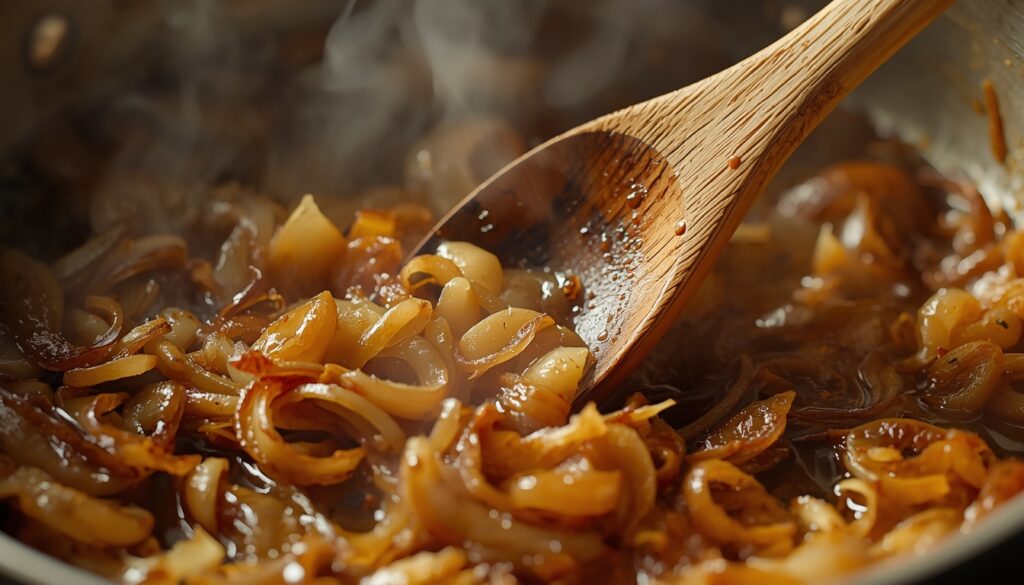
Add the finely chopped onions. This is where you need a bit of patience. Cook them on medium heat, stirring frequently, until they turn golden brown. It takes about 8-10 minutes.
Since we’re using less oil, they might stick a little—if that happens, splash in a tablespoon of water and scrape the bottom of the pot. That stuck bit is actually flavor.
Step 3
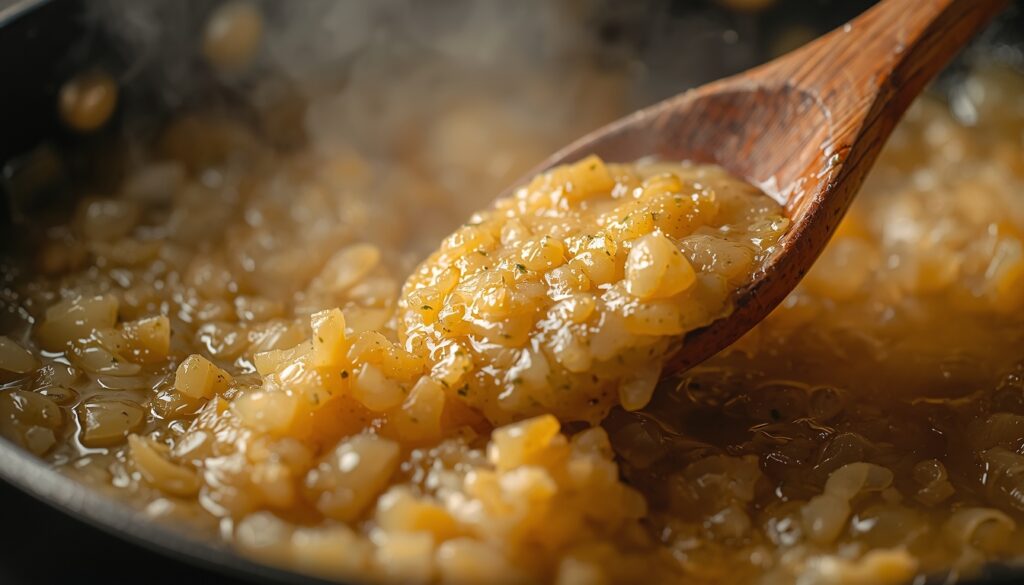
Once the onions are nicely browned, add the ginger-garlic paste and green chilies.
Stir continuously for about a minute until the raw smell disappears. If it starts sticking, add a tiny splash of water.
Step 4
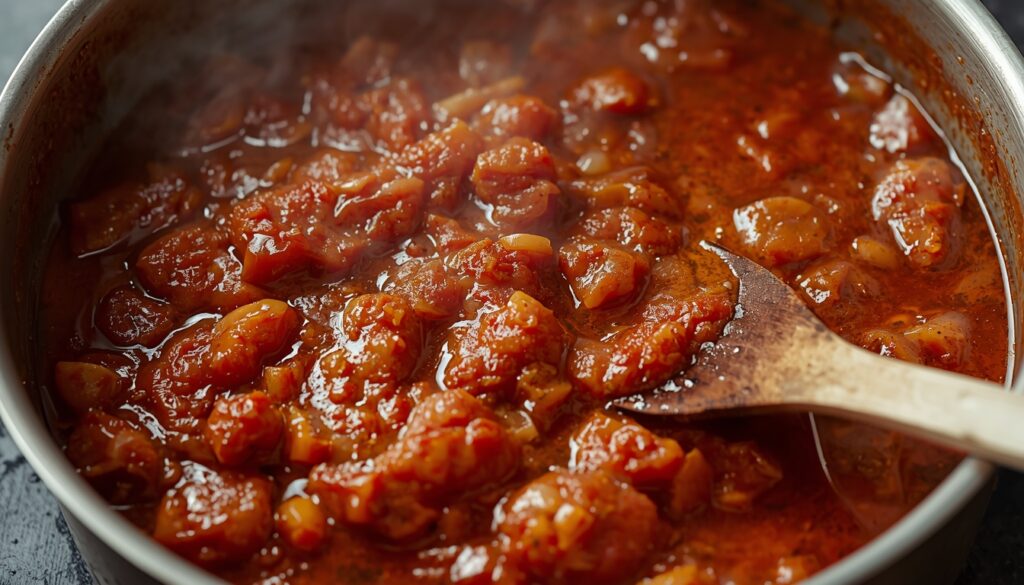
Add the tomato puree and cook until the oil starts to separate from the masala. This usually takes 5-6 minutes.
You’ll see the mixture darken and thicken, and a little oil will appear around the edges. Don’t skip this step—it’s what makes the curry rich.
Step 5
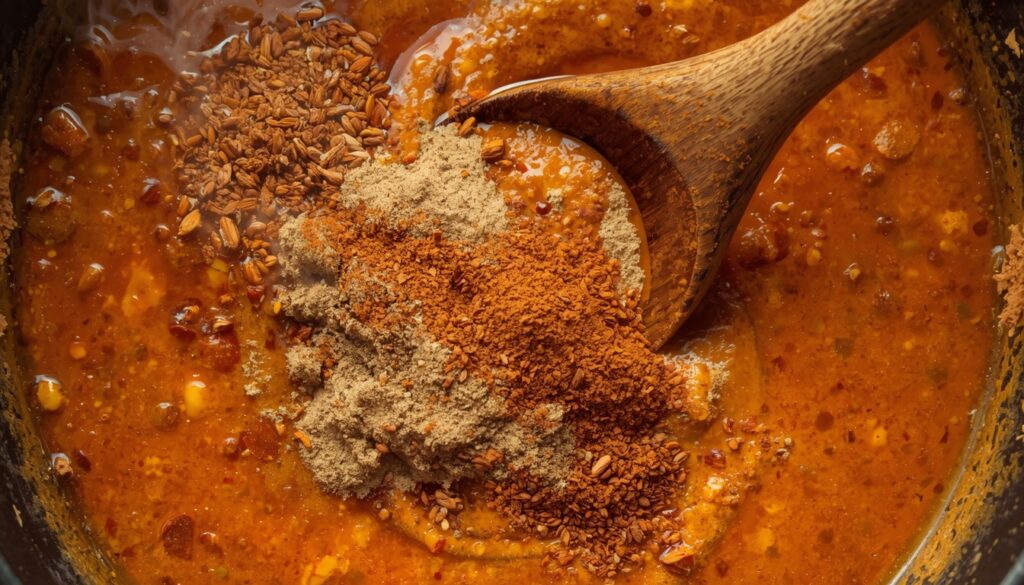
Add the turmeric, coriander powder, red chili powder, and salt. Stir well so the spices coat everything evenly, then let them cook for another minute.
This quick step helps the spices bloom and brings out their flavor before moving on.
Step 6
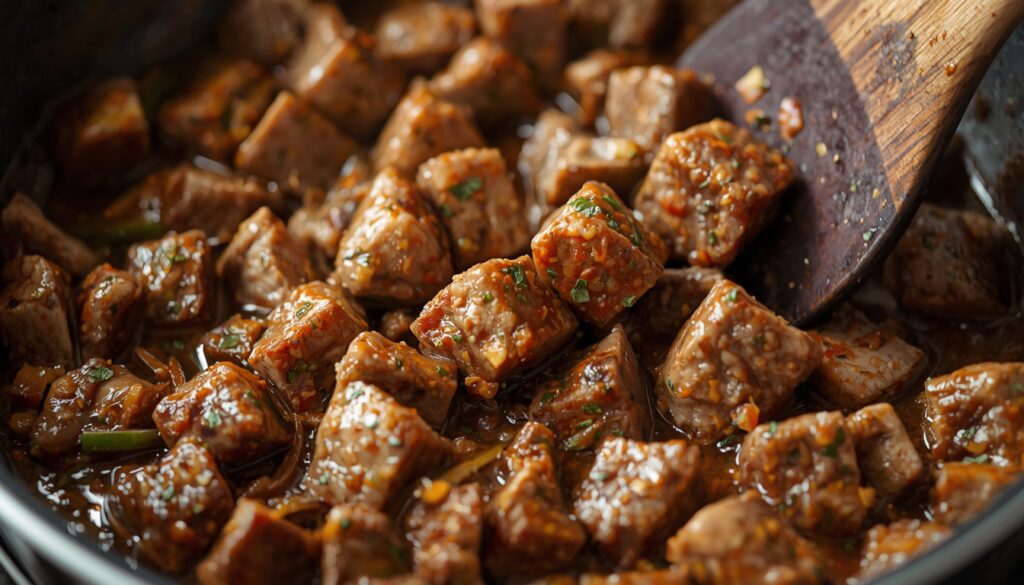
Add the beef cubes and mix well so every piece gets coated in the masala. Cook over medium-high heat for about 5 minutes, stirring now and then.
The meat will release some liquid as it cooks—that’s completely normal, so don’t worry about it.
Step 7
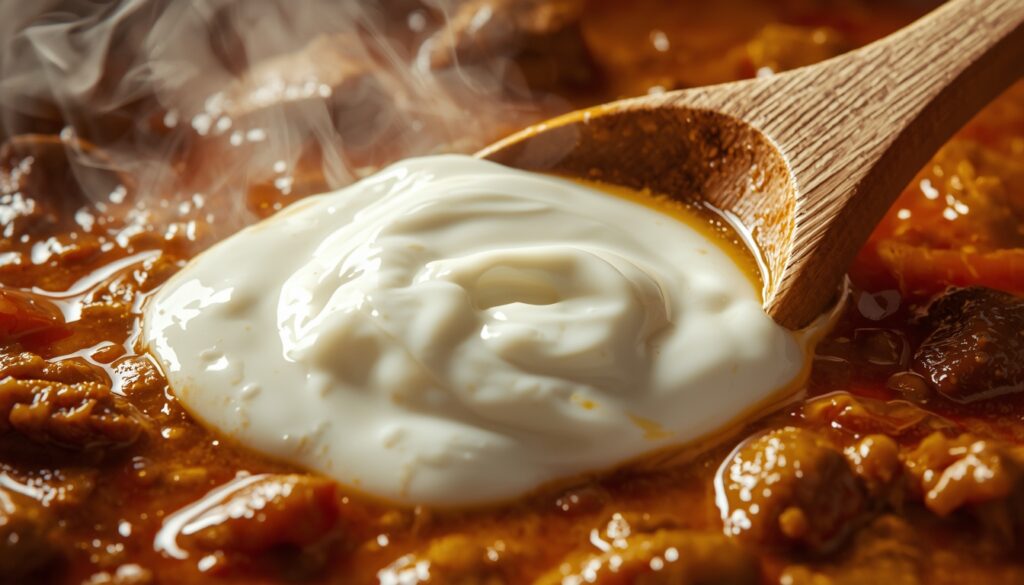
Whisk the yogurt in a small bowl until it’s smooth, then stir it into the pot. The yogurt adds a nice creaminess and helps tenderize the beef.
Keep it moving in the pan for 2–3 minutes, stirring constantly so it doesn’t curdle.
Step 8
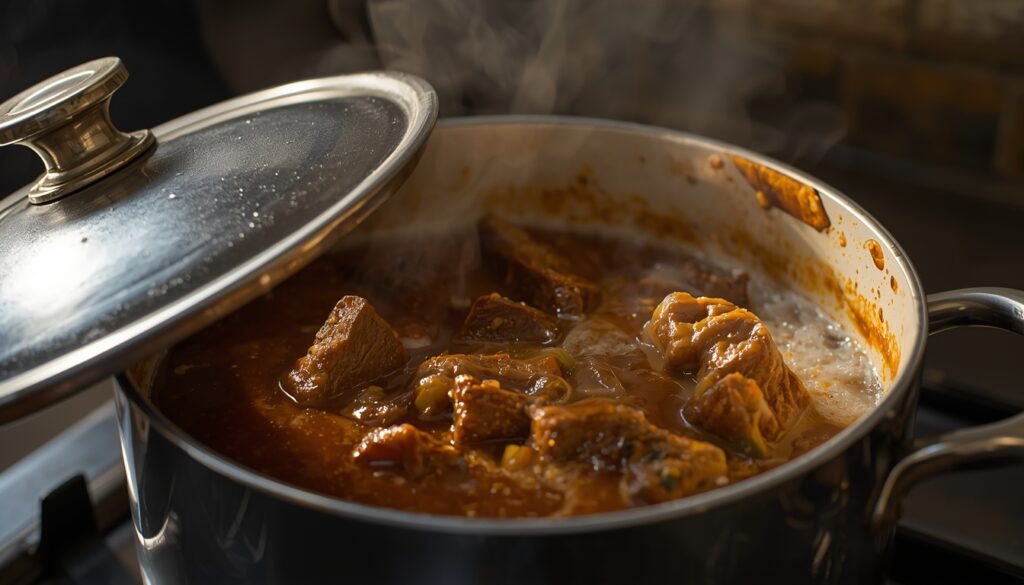
Add 1½ cups of water, give everything a good stir, and bring it to a boil. Once it’s bubbling, turn the heat down to low, cover the pot, and let it simmer for 45–50 minutes.
If you’re using a pressure cooker, cook for 4–5 whistles on medium heat. Keep an eye on it and add a splash of water if the gravy thickens too much.
Step 9
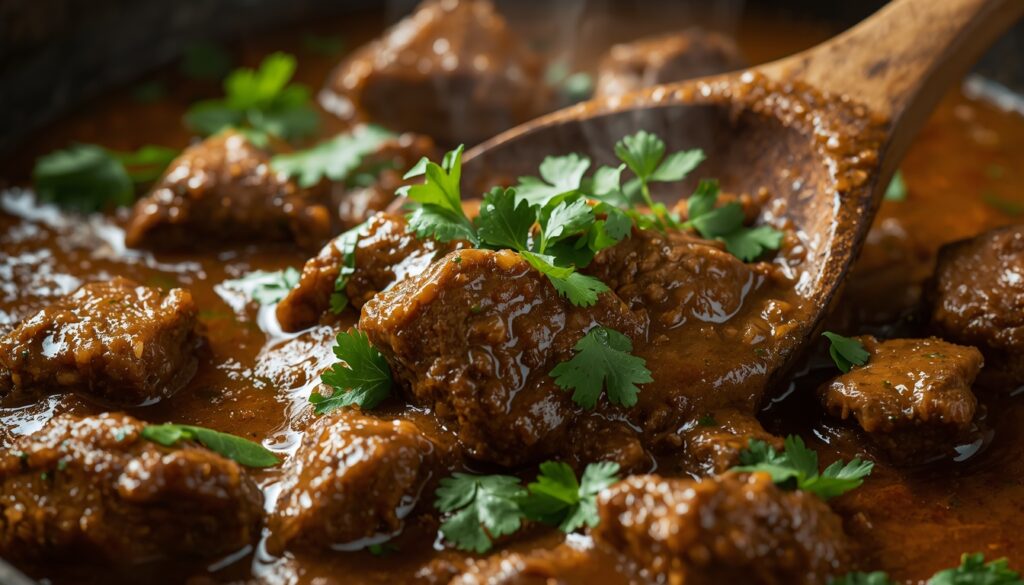
Once the beef is tender and the gravy has thickened the way you like, stir in the garam masala.
Give it a taste and adjust the salt if needed. Turn off the heat, sprinkle with fresh cilantro, and you’re ready to serve.
Serving Suggestions
This curry goes really well with steamed basmati rice or whole wheat roti. I usually add a side of cucumber raita to cool things down a bit. A simple onion salad with lemon juice and a sprinkle of chaat masala works just as well.
If you’re cooking for guests, this is a good one to make ahead. It actually tastes better the next day, once the flavors have had time to come together. When reheating, keep the heat low and add a small splash of water if the gravy has thickened too much.
To round out the meal, start with something light like a soup or salad. Serve the curry with rice or bread, then finish with something simple—fresh fruit or a small bowl of kheer does the job nicely.
Storage Tips
Let the curry cool completely before moving it into an airtight container. It’ll keep well in the fridge for about 3–4 days. The flavors deepen as it sits, which is why the leftovers usually taste even better.
You can freeze it too, for up to two months. Portion it into freezer-safe containers and label them with the date—it’s one of those small steps you’ll appreciate later. When you’re ready to eat, let it thaw overnight in the fridge before reheating.
Reheating Tips
Reheat the curry on the stovetop over low heat, stirring now and then so it warms evenly. If the gravy has thickened too much, add a few tablespoons of water to loosen it up.
I wouldn’t recommend blasting it in the microwave—it tends to make the meat a little rubbery. If the microwave is your only option, use about 50% power and heat it in short bursts, stirring in between so it doesn’t overcook.
Common Mistakes to Avoid
Using too much heat.
When you’re cooking with less oil, high heat will burn things fast. Stick to medium or medium-low, especially while browning the onions and cooking the masala.
Not cooking the tomatoes enough.
If the tomatoes don’t cook down until the oil starts to separate, the curry can taste raw and overly tangy. This step just needs patience—don’t rush it.
Adding cold yogurt straight from the fridge.
Cold yogurt plus hot masala is a recipe for curdling. Let it come to room temperature, whisk it smooth, and add it slowly while stirring the whole time.
Skipping the resting time.
I know it’s tempting to dig in right away, but letting the curry sit for about 10 minutes really helps. The flavors settle, and the gravy thickens slightly on its own.
Overcrowding the pot.
If you’re doubling the recipe, grab a bigger pot. Too much meat in one pan means nothing browns properly, and everything ends up steaming instead.
Adding all the water at once.
Go slowly and add water in stages. You can always thin the curry later, but there’s no easy fix once it’s gone too watery.